
How to Start a Startup in India in 2026: Complete Step-by-Step Guide
Starting a startup in India in 2026 is more accessible than ever, but a successful venture requires much more than an innovative idea. Entrepreneurs need to identify a genuine problem, validate the solution, understand the market, develop a sustainable business model, build the right team, manage finances, and acquire customers.
For students, first-time founders, innovators, and early-stage entrepreneurs, the startup journey can seem complicated. The good news is that it becomes easier when broken into clear stages.
This guide explains how to start a startup in India, from finding and validating an idea to registration, funding, incubation, launch, and scaling. It also explains how startup incubators such as IIMT Business Incubator Foundation can support entrepreneurs during the early stages of business development. The structure and SEO requirements for this pillar article are based on the provided content brief.
What Is a Startup?
A startup is generally a young business designed to solve a specific problem through a product, service, process, or business model that has potential to grow. Startup Support for Students
A startup is different from a traditional small business primarily in its growth ambition and approach to innovation. A local business may focus on serving a defined market sustainably, while a startup often seeks a repeatable and scalable model that can expand into larger markets.
However, not every new business is automatically a startup under India’s official startup-recognition framework. Eligibility for DPIIT recognition depends on factors such as the entity’s legal structure, age, turnover, innovation or scalability, and other conditions. Startup Support for Students
Why Start a Startup in India in 2026?
India offers opportunities for entrepreneurs across technology, healthcare, education, agriculture, financial services, sustainability, manufacturing, artificial intelligence, digital services, and other sectors.
Several factors make entrepreneurship attractive:
- Increasing adoption of digital technology
- Large and diverse consumer markets
- Growth of technology-enabled businesses
- Increasing interest in innovation
- Availability of incubators and accelerators
- University entrepreneurship ecosystems
- Government initiatives supporting eligible startups
- Growing access to mentors, investors, and startup networks
The opportunity, however, should not be confused with guaranteed success. A strong startup still needs customer validation, disciplined execution, financial planning, and continuous improvement.
How to Start a Startup in India: Step-by-Step
Step 1: Identify a Real Problem
The strongest startup ideas often begin with a problem rather than a product.
Instead of asking, “What business should I start?”, ask:
“What problem do people repeatedly face, and can I solve it better?”
Look at problems around you—in education, transportation, healthcare, agriculture, retail, finance, technology, sustainability, or everyday services.
What to do
Write down:
- The problem
- Who experiences it
- How frequently it occurs
- Current solutions
- Why existing solutions are insufficient
- Your proposed solution
Example
Suppose college students struggle to find affordable, healthy meals near campus. A startup could explore a technology-enabled meal subscription service designed specifically for students.
Common mistake
Do not build a product simply because you think it is interesting. First establish that a meaningful group of people actually needs it.
Step 2: Find and Validate Your Startup Idea
Startup validation determines whether your idea deserves further investment of time and money.
Talk to potential customers before building the complete product.
You can validate an idea through:
- Customer interviews
- Surveys
- Landing pages
- Prototype demonstrations
- Pre-orders
- Pilot programs
- Social media testing
- Competitor research
The objective is not to make everyone say your idea is good. The objective is to discover whether customers have a real problem and whether your proposed solution addresses it.
A useful validation question
Instead of asking:
“Would you use this product?”
Ask:
“How are you solving this problem today?”
The answer can reveal whether the problem is serious enough to justify a new solution.
Step 3: Conduct Market Research
Market research helps you understand the environment in which your startup will operate.
Research:
- Target customers
- Market demand
- Competitors
- Pricing
- Customer behaviour
- Industry trends
- Distribution channels
- Regulatory requirements
- Potential barriers to entry
Use both primary and secondary research.
Primary research includes interviews, surveys, observations, and pilot testing. Secondary research includes industry reports, government publications, competitor websites, and credible market information.
Avoid relying on unsupported market-size claims in your business plan.
Step 4: Define Your Target Customer
A startup cannot effectively serve “everyone.”
Create a clear customer profile.
For example:
Target customer: College students aged 18–25 living away from home who want convenient and affordable meal options.
Define:
- Age
- Location
- Occupation
- Income or spending capacity
- Needs
- Pain points
- Buying behaviour
- Preferred channels
A clearly defined audience makes product development and digital marketing much more effective.
Step 5: Analyze Competitors
Competition is not necessarily a bad sign. Existing competitors can demonstrate that customers already spend money solving the problem.
Create a competitor comparison covering:
| Factor | Competitor A | Competitor B | Your Startup |
|---|---|---|---|
| Product | Existing solution | Existing solution | Your solution |
| Pricing | Medium | High | Proposed price |
| Target audience | Broad | Niche | Specific |
| Main strength | Brand | Features | Your advantage |
| Main weakness | Limited flexibility | Higher price | Early-stage |
Ask:
Why would a customer choose your startup instead of an existing alternative?
Your answer becomes part of your value proposition.
Step 6: Create a Business Model
A good product does not automatically create a successful business.
You need to understand how the startup will create, deliver, and capture value.
Consider:
- Customer segments
- Value proposition
- Revenue streams
- Pricing
- Distribution channels
- Key activities
- Key partners
- Major costs
- Customer acquisition
Possible startup revenue models include:
- Subscription
- Commission
- Marketplace
- Licensing
- Direct sales
- Freemium
- SaaS
- Advertising
- Service fees
Choose the model according to customer behaviour rather than following a popular trend.
Step 7: Build an MVP
An MVP (Minimum Viable Product) is a basic version of a product that allows a startup to test its core assumption with real users.
The objective is not to create a perfect product.
The objective is to learn.
For example, instead of spending months building a complete mobile application, an early-stage founder might test the core service through a simple website, WhatsApp workflow, or prototype.
Why an MVP matters
An MVP can help you:
- Test customer demand
- Collect feedback
- Identify product problems
- Reduce unnecessary development
- Understand customer behaviour
- Improve product-market fit
Step 8: Test Your Product or Service
Launch your MVP with a small group of users.
Measure:
- Number of users
- Activation
- Repeat usage
- Customer feedback
- Conversion rate
- Retention
- Revenue
- Customer acquisition cost
Do not treat negative feedback as failure. Early feedback can reveal exactly what needs improvement.
Step 9: Choose the Right Business Structure
Before startup registration, founders should understand the available legal structures and select one appropriate to their circumstances.
Common structures include:
- Sole proprietorship
- Partnership firm
- Limited Liability Partnership (LLP)
- Private Limited Company
The appropriate structure depends on factors such as ownership, liability, taxation, investment plans, compliance requirements, and the nature of the business.
If you intend to seek external investment or build a scalable venture, discuss the appropriate structure with a qualified legal or financial professional.
Step 10: Register Your Business
Business registration requirements depend on the legal structure and business activities.
Depending on the venture, founders may need to consider:
- Incorporation or registration
- PAN/TAN
- GST registration where applicable
- Bank account
- Accounting systems
- Contracts
- Licences or sector-specific approvals
- Employment-related compliance
- Intellectual property protection
Do not assume that every startup requires every registration.
Requirements can change according to the business model, turnover, location, sector, and applicable regulations. Always verify current requirements through official government sources or qualified professionals.
Step 11: Understand DPIIT Startup Recognition
DPIIT recognition under the Startup India initiative can be relevant for eligible startups.
As of the current Startup India information, eligible entities can include Private Limited Companies, registered Partnership Firms, LLPs, and Cooperative Societies, subject to the applicable recognition criteria. The current framework also distinguishes DeepTech startups, including different age and turnover thresholds.
The Startup India portal currently states that the non-DeepTech startup recognition period is up to 10 years and the turnover threshold is ₹200 crore; for eligible DeepTech startups, the corresponding limits are up to 20 years and ₹300 crore.
Because government rules can change, founders should verify the latest eligibility conditions before applying.
DPIIT recognition can provide access to various benefits and support mechanisms, including IPR-related support, easier compliance in specified areas, and other Startup India benefits subject to eligibility and separate conditions.
The Startup India portal states that DPIIT recognition applications are made through the National Single Window System (NSWS), and the Ministry of Commerce and Industry does not charge a fee for the DPIIT Certificate of Recognition.
Step 12: Protect Your Intellectual Property
Your startup may create valuable intellectual property such as:
- Brand names
- Logos
- Software
- Designs
- Technical inventions
- Written content
- Proprietary processes
Depending on the asset, protection may involve trademarks, patents, copyrights, designs, or contractual protections.
Think about intellectual property early—especially before publicly disclosing a potentially patentable invention.
Eligible startups may also have access to IPR-related support under Startup India.
Step 13: Create a Startup Business Plan
A business plan gives your startup direction.
A practical startup business plan can include:
- Executive summary
- Problem
- Solution
- Target market
- Competitor analysis
- Business model
- Marketing strategy
- Operations
- Team
- Financial assumptions
- Funding requirements
- Growth strategy
- Risks
Your business plan should be realistic rather than simply optimistic.
Investors, mentors, incubators, and potential partners will often want to understand how your startup intends to create sustainable value.
Step 14: Build Your Founding Team
A strong team can be as important as a strong idea.
Look for complementary capabilities such as:
- Product development
- Technology
- Sales
- Marketing
- Finance
- Operations
- Industry expertise
Do not build a large team simply to appear established.
Start with the capabilities you genuinely need.
Clearly define:
- Roles
- Responsibilities
- Ownership
- Decision-making
- Working expectations
- Long-term objectives
Step 15: Calculate Startup Costs
Startup costs vary significantly depending on the business.
A service-based business may require relatively limited initial infrastructure, while a technology, manufacturing, healthcare, or physical-product startup may require considerably more investment.
Consider:
- Product development
- Technology
- Salaries
- Workspace
- Equipment
- Registration and professional services
- Marketing
- Inventory
- Customer support
- Software
- Compliance
- Working capital
Create three scenarios:
Minimum: What do I need to start?
Expected: What do I realistically need for the first stage?
Growth: What will I need if demand increases?
This approach is more useful than selecting an arbitrary startup budget.
Step 16: Choose a Funding Strategy
Not every startup needs venture capital.
Possible funding sources include:
Bootstrapping
Founders use personal savings or early business revenue.
Suitable when: Initial costs are manageable and founders want maximum control.
Friends and Family
Early support may come from personal networks.
Suitable when: The business is at an early stage and requires initial capital.
Bank or Business Loans
Debt financing can provide capital without giving away equity, but repayment obligations must be considered carefully.
Government Schemes and Grants
Eligible startups may explore government programs and funding initiatives.
Incubators
Incubators can provide guidance, infrastructure, networks, and, depending on the program, funding assistance or connections.
Angel Investors
Angels may invest personal capital in promising early-stage startups.
Venture Capital
VC funding may be appropriate for startups with strong growth potential that require significant capital to scale.
The best funding strategy depends on your startup stage, capital requirement, business model, growth potential, and willingness to share ownership.
Step 17: Create a Startup Pitch Deck
When approaching investors or funding programs, you need to communicate your startup clearly.
A pitch deck commonly covers:
- Problem
- Solution
- Product
- Market opportunity
- Business model
- Traction
- Competition
- Competitive advantage
- Go-to-market strategy
- Team
- Financial outlook
- Funding requirement
Keep the presentation focused.
The purpose of a pitch deck is not to explain every detail of the business. It is to communicate the most important information clearly enough to support the next conversation.
Step 18: Find Mentors and Incubation Support
Starting alone can make the entrepreneurial journey harder.
A startup incubator can provide structured support such as:
- Mentoring
- Business guidance
- Workspace
- Training
- Networking
- Funding assistance
- Product development support
- IPR support
- Business consulting
The exact support varies by incubator and program.
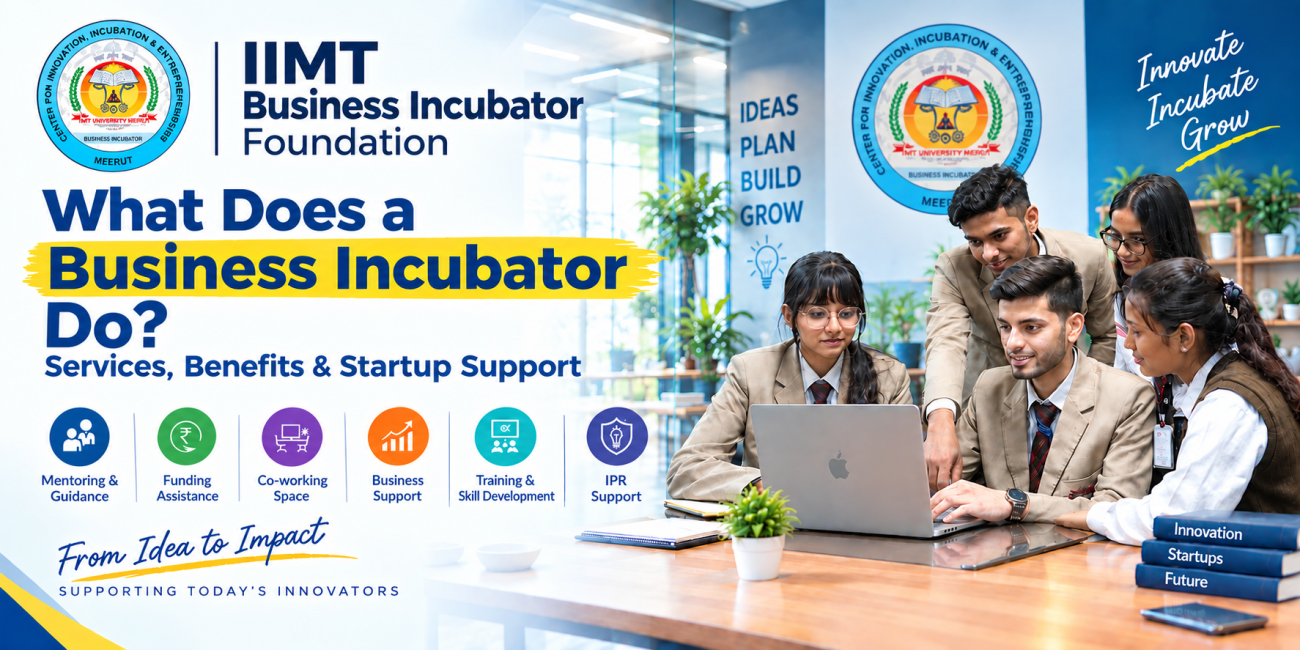
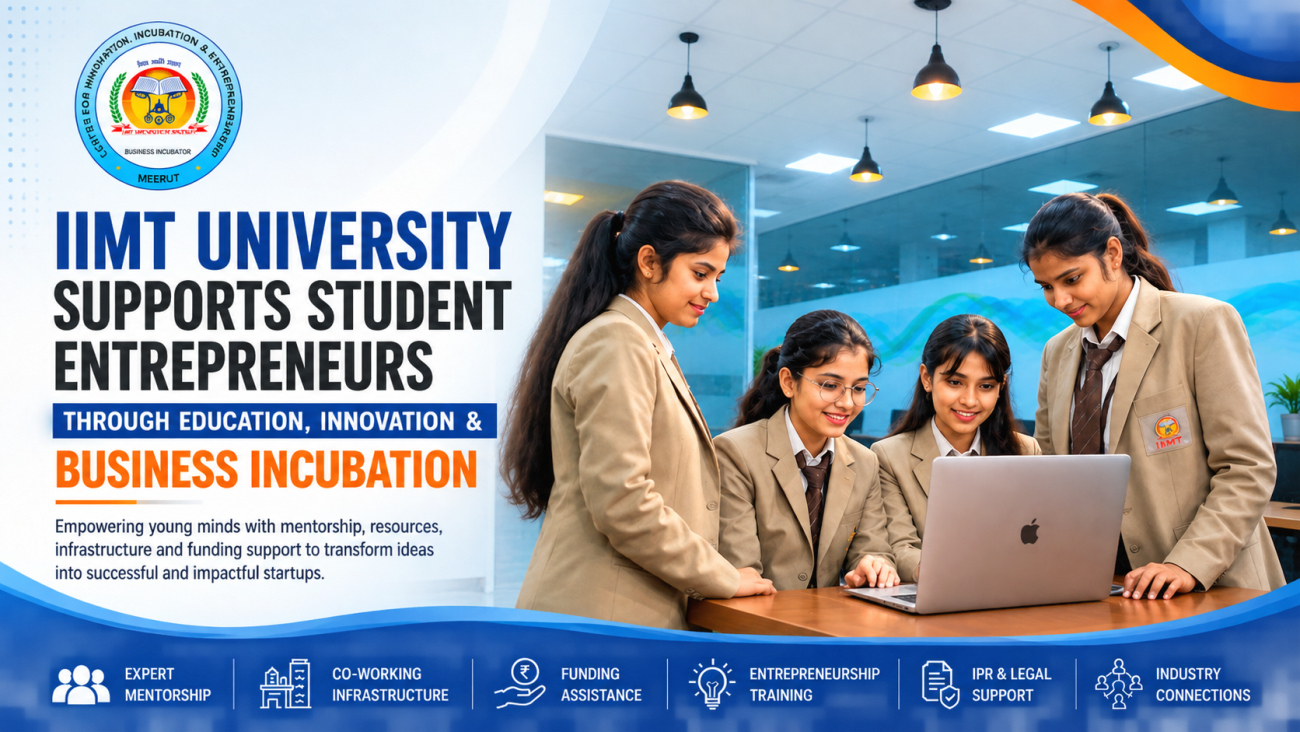
For entrepreneurs in Meerut, the IIMT Business Incubator Foundation (IIMT-BIF) provides services including business support and consulting, co-working spaces, mentoring support, funding assistance, training and workforce development, and IPR support.
The incubator also maintains a mentor network for early-stage startups and entrepreneurs.
Step 19: Launch Your Startup
Once your product has been sufficiently tested, move toward a controlled launch.
Start small.
You can launch in:
- One city
- One customer segment
- One industry
- One product category
- One digital channel
A focused launch allows you to learn faster.
Before launching, confirm:
- Product readiness
- Pricing
- Customer support
- Payment process
- Website or app
- Legal requirements
- Marketing materials
- Analytics
- Feedback channels
Step 20: Acquire Your First Customers
Customer acquisition is one of the biggest challenges for a new startup.
Potential channels include:
- SEO
- Content marketing
- Social media
- Email marketing
- Partnerships
- Referral programs
- Events
- Direct sales
- Paid advertising
- Community marketing
Do not attempt every channel simultaneously.
Select one or two channels where your target customers are most active and measure the results.
For example, a B2B technology startup may benefit more from direct outreach and industry networking than from broad consumer advertising.
Step 21: Measure Performance and Improve
After launch, collect real data.
Track metrics such as:
- Revenue
- Leads
- Conversion rate
- Customer acquisition cost
- Customer lifetime value
- Retention
- Churn
- Repeat purchases
- Product usage
- Cash flow
The right metrics depend on the business model.
A startup should regularly ask:
What is working?
Continuous learning is part of startup development.
Step 22: Scale the Startup
Scaling should happen after you have evidence that your business model works.
Before expanding, evaluate:
- Product-market fit
- Customer retention
- Unit economics
- Operational capacity
- Team capability
- Technology infrastructure
- Cash flow
- Customer support
Scaling too early can increase expenses before the business has established sustainable demand.
A responsible growth strategy may involve expanding geographically, adding products, increasing production, strengthening technology, building partnerships, or entering new customer segments.
How Much Money Is Required to Start a Startup in India?
There is no universal startup cost.
The amount depends on:
- Business type
- Location
- Product complexity
- Technology requirements
- Team size
- Equipment
- Regulatory requirements
- Marketing
- Working capital
A service startup may begin with relatively limited infrastructure, while a manufacturing or deep-tech venture may require substantial capital.
Students can also explore low-cost startup models such as:
- Digital services
- Content businesses
- Educational services
- Software products
- Online marketplaces
- Consulting
- Creative services
The important question is not simply “How much money do I need?”
Instead ask:
“What is the minimum capital required to validate my business model?”
Can a Student Start a Startup in India?
Yes. Students can explore entrepreneurship while studying, provided they understand the practical, legal, financial, and academic considerations involved.
Student entrepreneurs can begin with:
- Identifying campus problems
- Developing innovative ideas
- Conducting customer interviews
- Building prototypes
- Participating in entrepreneurship competitions
- Joining innovation programs
- Seeking mentorship
- Testing an MVP
- Exploring incubation support
A student does not necessarily need a fully developed company on day one.
The first objective can simply be learning whether the idea solves a genuine problem.
University-linked incubation ecosystems can be particularly useful because students can access mentoring, workshops, infrastructure, networks, and entrepreneurship-oriented activities.
How Startup Incubators Help Entrepreneurs
A startup incubator acts as a support ecosystem for early-stage founders.
The support may include:
Mentorship
Mentors can challenge assumptions, provide industry insights, and help founders make better decisions.
Business Consulting
Business support can help founders think through strategy, operations, marketing, and growth.
Infrastructure
Workspace and shared resources can reduce the initial operational burden.
Funding Assistance
Incubators can help founders understand funding requirements and, depending on their programs and networks, connect startups with potential funding opportunities.
Training
Workshops and training can strengthen business, leadership, pitching, and entrepreneurial skills.
Networking
Connections with entrepreneurs, investors, industry experts, institutions, and other startups can create new opportunities.
IPR Support
For innovation-led businesses, understanding patents, trademarks, copyright, and other intellectual property considerations is important.
IIMT-BIF’s official services page identifies these areas through its business support, co-working, mentoring, funding assistance, training, and IPR services.
IIMT Business Incubator Foundation: Supporting Startup Development
For entrepreneurs in Meerut and the surrounding region, IIMT Business Incubator Foundation is part of the IIMT University innovation and entrepreneurship Startup ecosystem.
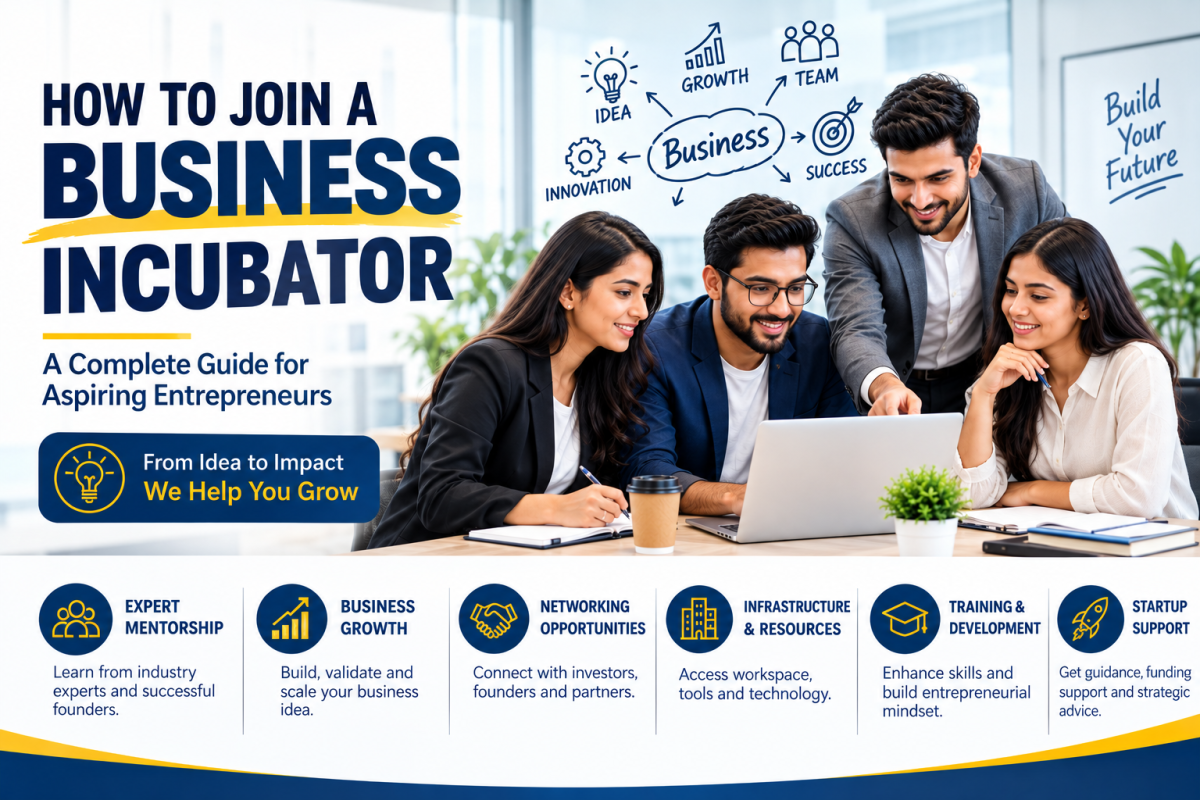
Its official website describes support areas including expert mentorship, funding opportunities, infrastructure, networking and collaboration, skill-development programs, and business support services.
The foundation’s services page further outlines business consulting, co-working spaces, mentoring, funding assistance, training and workforce development, and IPR support.
The incubator also publishes information about startups supported through its ecosystem, providing an indication of the range of ventures associated with the incubator.
For a founder, the practical value of incubation is not simply having a workspace. It is having access to an environment where an idea can be questioned, improved, tested, connected to expertise, and gradually prepared for the market.
Common Startup Mistakes to Avoid
1. Building Before Validating
Do not spend heavily before confirming customer demand.
2. Trying to Serve Everyone
A clearly defined customer segment makes product development easier.
3. Ignoring Competition
Competitor research can reveal both market opportunities and risks.
4. Chasing Funding Too Early
Funding should support a credible business strategy—not replace one.
5. Choosing the Wrong Team
Founders need complementary skills and clearly defined responsibilities.
6. Ignoring Cash Flow
Revenue, expenses, and available cash must be monitored carefully.
7. Scaling Too Quickly
Growth without operational readiness can create unnecessary costs.
8. Neglecting Intellectual Property
Innovative ideas and brands may need appropriate protection.
9. Ignoring Customer Feedback
Your first version will rarely be perfect.
10. Expecting Overnight Success
A startup is a process of experimentation, learning, execution, and improvement.
A Simple Startup Roadmap for First-Time Founders
If you are starting from zero, follow this sequence:
Problem → Idea → Validation → Market Research → Customer → Competitor Analysis → Business Model → MVP → Testing → Registration → Team → Funding → Pitch → Incubation → Launch → Customers → Measurement → Scale
This sequence can prevent founders from jumping directly from an idea to expensive execution.
Final Thoughts
Learning how to start a startup in India in 2026 is not about finding a shortcut to success. It is about following a disciplined process.
Start with a real problem. Validate your idea. Understand your customers. Research the market. Build an MVP. Create a sustainable business model. Select an appropriate legal structure. Understand registration and DPIIT recognition requirements. Protect intellectual property. Build the right team. Choose funding carefully. Launch, measure, learn, and improve how to start a startup in India
For students and early-stage entrepreneurs, startup incubation can provide an additional layer of guidance and resources. IIMT Business Incubator Foundation offers incubation-related services including mentoring, business consulting, co-working infrastructure, funding assistance, training, and IPR support.
Ready to turn your startup idea into a real business? Explore IIMT CIIE’s incubation and entrepreneurship resources and take the next step.
Frequently Asked Questions
1. How do I start a startup in India in 2026?
Start by identifying a genuine problem, validating your idea, researching the market, defining your customer, building an MVP, selecting an appropriate business structure, completing relevant registrations, creating a business plan, securing suitable funding, launching, and continuously improving the business.
2. How much money is required to start a startup in India?
There is no fixed amount. Startup costs depend on the business model, technology, team, location, equipment, marketing, regulatory requirements, and working capital. A founder should first determine the minimum capital required to validate the business.
3. Can a student start a startup in India?
Yes. Students can begin by identifying problems, researching markets, developing prototypes, testing ideas, participating in entrepreneurship programs, and seeking mentors or incubation support.
4. How do I register a startup in India?
The registration process depends on the legal structure selected and the nature of the business. Founders should verify current requirements through official government portals and obtain professional advice where necessary.
5. What is DPIIT startup recognition?
DPIIT startup recognition is part of the Startup India initiative for eligible entities. Recognition can provide access to specified benefits and support mechanisms, subject to eligibility and applicable conditions.
6. How can I fund my startup in India?
Funding options can include bootstrapping, personal savings, friends and family, loans, grants, government programs, incubators, angel investors, and venture capital. The appropriate option depends on the startup’s stage and requirements.
7. What is the difference between a startup and a small business?
A startup generally focuses on developing a repeatable and scalable business model, often around innovation. A small business may focus primarily on serving a defined local or regional market sustainably.
8. How do startup incubators help entrepreneurs?
Incubators can provide mentoring, business guidance, infrastructure, networking, training, funding assistance, product development support, and other resources depending on their programs.
9. How can I find a startup mentor?
Entrepreneurs can explore incubators, accelerators, university entrepreneurship programs, industry networks, startup events, and professional communities. IIMT-BIF also maintains a mentor network for entrepreneurs and early-stage startups.
10. What are good startup ideas in India?
Potential ideas can emerge from problems in education, healthcare, agriculture, sustainability, technology, logistics, financial services, digital services, and other sectors. The quality of an idea depends more on the problem, customer demand, solution, and business model than on the sector alone.
11. Can I start a startup without funding?
Yes. Some businesses can begin through bootstrapping or with limited initial resources. The feasibility depends on the business model and capital requirements.
12. How long does it take to launch a startup?
There is no universal timeline. A simple service business may launch faster than a regulated, technology-intensive, or manufacturing venture. Validation and regulatory requirements can significantly affect the timeline.
13. What mistakes should first-time founders avoid?
Common mistakes include failing to validate demand, ignoring competitors, spending too much too early, choosing the wrong team, ignoring cash flow, scaling prematurely, and failing to listen to customers.
14. What is an MVP?
An MVP, or Minimum Viable Product, is an early version of a product designed to test the core value proposition with real users and collect feedback before investing heavily in a complete solution.
15. How can an incubator help validate a startup idea?
An incubator can provide mentors, business guidance, market-related feedback, networking, product-development support, and an entrepreneurial environment that can help founders evaluate and improve an early-stage idea