
Startup Ideas for College Students in India: 15 Practical Business Ideas
College can be more than a place to earn a degree. startup ideas for college students in India It can also be a practical environment for identifying problems, experimenting with solutions, developing useful skills and learning how businesses work startup ideas for college students in India.
For students, entrepreneurship does not necessarily mean immediately building a large company. A business can begin with a simple service, a college project, a digital product, a local problem or a skill that other people are willing to pay for. The important part is to start with a genuine problem, understand potential customers and test the idea before making a major investment.
This is where startup ideas for college students in India become useful. Students can explore opportunities that fit around their academic schedules and gradually develop an idea into a sustainable business.
This guide covers 15 practical business opportunities, explains how students can test them, and outlines how mentorship and business incubation can help when an idea starts showing potential.
Why College Students Should Consider Starting a Business
College provides an environment where students can learn both inside and outside the classroom. Starting a small business or testing a startup concept can complement academic learning by giving students practical exposure to real-world challenges.
Entrepreneurship can help students develop skills such as:
- Communication
- Customer research
- Sales
- Marketing
- Financial planning
- Problem-solving
- Negotiation
- Project management
- Teamwork
- Digital skills
- Decision-making
A student does not have to leave college to explore entrepreneurship. In many cases, the first step can be a small experiment conducted alongside studies.
For example, a student with graphic design skills could create social media designs for a local business. A computer science student could develop a simple digital solution to a campus problem. A student interested in education could experiment with tutoring or educational content.
The objective should not simply be to make money quickly. The more useful objective is to identify a problem, test a solution and learn from real customers.
This approach also allows students to build a portfolio of practical work. Even when an idea does not become a full startup, the experience gained from researching customers, creating an MVP and communicating with users can be valuable.
How to Choose the Right Startup Idea as a College Student
Choosing from hundreds of startup ideas for students can be difficult. Instead of selecting an idea simply because it sounds profitable, students should evaluate whether they can realistically execute it.
Identify a Real Problem
Good business opportunities usually begin with problems.
Look around your college, neighbourhood and online communities. What do students, teachers, local businesses or families struggle with?
A problem does not have to be complicated. It could involve communication, convenience, food, education, marketing, technology or access to services.
The key question is:
What problem can I solve better, faster, more conveniently or more affordably?
Understand Your Target Customers
Before building anything, identify who might use or purchase the solution.
A student startup could target:
- College students
- Parents
- Teachers
- Local businesses
- Educational institutions
- Small retailers
- Professionals
- Event organisers
- Online communities
The more clearly you define the customer, the easier it becomes to design and market the product or service.
Check Market Demand
An idea may sound excellent but still have limited demand.
Talk to potential customers. Ask about their current problems, how they solve them and what they would expect from an alternative solution.
Do not ask only, “Would you buy this?” Look for evidence of an actual problem.
Start With a Low-Cost MVP
An MVP, or Minimum Viable Product, is a basic version of a product or service that allows you to test the idea.
For example, instead of building a complete mobile application, a student could initially test the service through a simple website, form or messaging platform.
The goal is learning, not perfection.
Consider Your Skills and Available Time
A good student business should fit your current capabilities and schedule.
If you have strong writing skills, content services may be practical. If you understand coding, technology solutions may be appropriate.
Consider how many hours you can realistically dedicate each week without compromising your education.
Test the Idea Before Investing More Money
Avoid spending heavily before understanding whether customers actually want the solution.
Start with conversations, prototypes, samples, pilot services or small batches. Use feedback to decide whether to continue, change the concept or stop.
15 Startup Ideas for College Students in India
The following opportunities represent practical business ideas for college students that can be started on a small scale. They are not guaranteed to be profitable. Their success depends on execution, customer demand, competition, pricing and the student’s ability to manage the business.
1. Digital Marketing Services
What the business is:
Students can provide digital marketing services to local businesses, startups and professionals that need help with their online presence.
Problem it solves:
Many small businesses may have limited time or expertise for managing digital channels consistently.
Target customers:
Local shops, restaurants, educational businesses, service providers, professionals and small companies.
How students can start:
Learn fundamental digital marketing skills and create sample campaigns or content. Approach a small number of businesses with a clearly defined service package.
Approximate initial investment category:
Low. A computer, internet connection and relevant software or tools may be sufficient to begin.
Skills required:
Digital marketing, communication, content creation, analytics and basic advertising knowledge.
How to get the first customers:
Start with local businesses, college networks and referrals. A portfolio demonstrating actual work can make outreach easier.
Growth potential:
The service can potentially expand from individual clients to a small marketing team or specialised agency.
Key challenge:
Demonstrating measurable value and maintaining consistent client communication.
Why it can work for college students:
It can often be performed remotely and scheduled around classes.
2. Content Writing & SEO Services
What the business is:
Students with strong writing skills can offer blog writing, website content, SEO content, product descriptions or editing services.
Problem it solves:
Businesses and websites need useful content to communicate with audiences and support their digital presence.
Target customers:
Startups, educational organisations, agencies, bloggers, local businesses and online stores.
How students can start:
Create several writing samples covering different subjects. Learn keyword research, search intent, content structure and basic on-page SEO.
Approximate initial investment category:
Low.
Skills required:
Writing, research, editing, SEO fundamentals and communication.
How to get the first customers:
Build a portfolio and contact small businesses or agencies. Networking through professional platforms can also help.
Growth potential:
A student can progress from freelance writing to a specialised content business or small agency.
Key challenge:
Producing original, accurate and genuinely useful content rather than relying on repetitive material.
Why it can work for college students:
Writing projects can often be completed on a flexible schedule.
3. Social Media Management
What the business is:
Students can manage social media pages for businesses or organisations.
Problem it solves:
Businesses may struggle to create consistent posts, captions, creative assets and engagement strategies.
Target customers:
Local businesses, professionals, student organisations, startups and small brands.
How students can start:
Learn content planning, basic design, analytics and platform-specific communication. Prepare a sample monthly content calendar.
Approximate initial investment category:
Low.
Skills required:
Social media strategy, writing, design, communication and analytics.
How to get the first customers:
Approach businesses with weak or inconsistent social media activity and offer a clearly defined pilot service.
Growth potential:
Services can expand into content production, paid advertising and broader digital marketing.
Key challenge:
Maintaining quality and proving that social media activity contributes to business objectives.
Why it can work for college students:
Much of the work can be managed digitally.
4. Website Development Services
What the business is:
Students with web development knowledge can build websites for individuals, local businesses and small organisations.
Problem it solves:
Businesses often need a professional online presence but may not have technical resources internally.
Target customers:
Local businesses, professionals, educational initiatives, startups and small organisations.
How students can start:
Build a few demonstration websites and learn how to communicate project requirements, timelines and maintenance expectations.
Approximate initial investment category:
Low to moderate.
Skills required:
HTML, CSS, JavaScript, CMS platforms or other relevant development technologies.
How to get the first customers:
Use personal networks, local businesses, student organisations and referrals.
Growth potential:
The business can develop into web design, development, maintenance or specialised technology services.
Key challenge:
Managing deadlines, technical problems and changing client requirements.
Why it can work for college students:
Projects can be scheduled according to academic commitments.
5. Graphic Design & Canva Services
What the business is:
Students can create social media graphics, presentations, posters, brochures, event creatives and other visual materials.
Problem it solves:
Small organisations frequently need visual communication materials without hiring a full-time designer.
Target customers:
Businesses, student clubs, events, educators, startups and professionals.
How students can start:
Develop a portfolio containing different design formats and learn fundamental principles of layout, typography and visual hierarchy.
Approximate initial investment category:
Low.
Skills required:
Graphic design, Canva or other design software, creativity and communication.
How to get the first customers:
Start with campus events, clubs and local businesses.
Growth potential:
The service can expand into branding, presentation design and visual content packages.
Key challenge:
Standing out in a competitive freelance market.
Why it can work for college students:
Design work can be completed remotely and on a project basis.
6. Online Tutoring
What the business is:
Students can provide online tutoring in subjects they understand well.
Problem it solves:
Learners often need additional explanation, practice and personalised academic support.
Target customers:
School students, junior college students or learners preparing for specific subjects.
How students can start:
Choose one subject or skill and create a structured tutoring plan.
Approximate initial investment category:
Low.
Skills required:
Subject knowledge, communication, teaching and patience.
How to get the first customers:
Begin through personal networks, referrals and local communities.
Growth potential:
Tutoring can potentially develop into group classes, recorded resources or educational digital products.
Key challenge:
Maintaining teaching quality and building trust with learners and parents.
Why it can work for college students:
Sessions can be scheduled around classes.
7. Campus Food or Healthy Meal Service
What the business is:
Students can explore a food service focused on convenient snacks, meals or healthier options for students.
Problem it solves:
Students may need convenient food options between classes or during busy academic schedules.
Target customers:
College students, staff or nearby student communities.
How students can start:
Validate demand before purchasing equipment or inventory. A small pilot with limited menu options can help understand customer preferences.
Approximate initial investment category:
Moderate, depending on the model and local requirements.
Skills required:
Food preparation or sourcing, hygiene management, customer service, costing and operations.
How to get the first customers:
Use campus networks and word-of-mouth, subject to applicable college and local rules.
Growth potential:
A successful model could potentially expand to subscriptions, catering or multiple locations.
Key challenge:
Food safety, consistency, logistics and managing perishables.
Why it can work for college students:
A focused menu and limited operating hours can make the model easier to manage.
8. Customized Merchandise
What the business is:
Students can sell customised T-shirts, notebooks, mugs, hoodies, stickers or other merchandise.
Problem it solves:
Groups, clubs and individuals often want personalised products for events, communities or gifts.
Target customers:
Students, clubs, societies, events and niche communities.
How students can start:
Instead of buying large inventory, students can initially work with printing or production partners and test designs in small quantities.
Approximate initial investment category:
Low to moderate.
Skills required:
Design, marketing, customer service and basic order management.
How to get the first customers:
Target campus events, student groups and communities with specific interests.
Growth potential:
A niche merchandise brand can potentially expand through online sales.
Key challenge:
Inventory management, product quality and competition.
Why it can work for college students:
Students already have access to communities that can help validate designs.
9. Student Event Management
What the business is:
Students can organise or support college events, workshops, competitions and private functions.
Problem it solves:
Events require coordination across venues, participants, vendors, promotion and logistics.
Target customers:
Student organisations, educational institutions, local organisations and private clients.
How students can start:
Begin with small campus events and document successful projects for a portfolio.
Approximate initial investment category:
Low to moderate, depending on whether the student is providing planning services or financing event components.
Skills required:
Organisation, communication, negotiation, planning and problem-solving.
How to get the first customers:
Campus clubs and student communities are natural starting points.
Growth potential:
Services can expand into event planning, promotion, production and corporate events.
Key challenge:
Last-minute changes and coordination between multiple stakeholders.
Why it can work for college students:
Students can gain practical event experience while studying.
10. Photography & Videography
What the business is:
Students with photography or video skills can provide event coverage, portraits, promotional videos and social media content.
Problem it solves:
People and organisations need professional visual content for events and digital marketing.
Target customers:
Students, colleges, businesses, events and local organisations.
How students can start:
Build a portfolio using permitted projects, personal work and small events.
Approximate initial investment category:
Moderate, particularly if specialised equipment is required.
Skills required:
Photography, videography, editing, lighting and client communication.
How to get the first customers:
Campus events and local networks can provide initial opportunities.
Growth potential:
The business can expand into commercial video, brand photography or content production.
Key challenge:
Equipment costs, competition and project deadlines.
Why it can work for college students:
It provides flexible project-based work.
11. Local Business Marketing Services
What the business is:
Students can help neighbourhood businesses improve their visibility through digital listings, content, promotional campaigns and basic online marketing.
Problem it solves:
Small businesses may have limited resources for structured local marketing.
Target customers:
Retailers, restaurants, clinics, service providers and local professionals.
How students can start:
Choose a local niche and understand common customer acquisition challenges.
Approximate initial investment category:
Low.
Skills required:
Local marketing, communication, content and basic analytics.
How to get the first customers:
Visit or contact local businesses and offer a small, clearly defined service.
Growth potential:
A student can specialise in a particular industry and develop repeatable services.
Key challenge:
Showing business value and retaining clients.
Why it can work for college students:
The target market can be geographically accessible.
12. Reselling or Niche E-Commerce
What the business is:
Students can identify a specific product category and sell products through suitable online channels.
Problem it solves:
Customers may want convenient access to products within a particular niche.
Target customers:
The selected niche audience.
How students can start:
Research suppliers, competition, pricing, shipping and customer demand before purchasing inventory.
Approximate initial investment category:
Low to moderate depending on the inventory model.
Skills required:
Product research, customer service, marketing, pricing and order management.
How to get the first customers:
Use relevant communities, content marketing and carefully targeted promotion.
Growth potential:
A focused product category can potentially become a specialised online store.
Key challenge:
Competition, inventory risk, returns and margins.
Why it can work for college students:
A small catalogue allows students to experiment without building a large operation.
13. Educational Digital Products
What the business is:
Students can create digital resources such as study templates, educational guides, presentation templates, practice materials or skill-based resources.
Problem it solves:
Learners often need organised resources that make studying or skill development easier.
Target customers:
Students, educators and specific learner communities.
How students can start:
Identify a recurring learning problem and create an original resource that addresses it.
Approximate initial investment category:
Low.
Skills required:
Subject knowledge, content creation, design and digital marketing.
How to get the first customers:
Share useful educational content and build an audience around a specific topic.
Growth potential:
A digital product portfolio can potentially expand into courses, memberships or other learning resources.
Key challenge:
Creating genuinely useful and original content while maintaining quality.
Why it can work for college students:
Digital products can be developed incrementally.
14. Sustainable or Eco-Friendly Products
What the business is:
Students can explore products or services designed around reuse, reduced waste or more sustainable consumption.
Problem it solves:
Consumers and organisations may be interested in alternatives to disposable or resource-intensive products.
Target customers:
Students, households, organisations and environmentally conscious communities.
How students can start:
Research the actual environmental value of the product and test customer demand before investing in inventory.
Approximate initial investment category:
Low to moderate.
Skills required:
Product research, sourcing, branding, marketing and customer education.
How to get the first customers:
Campus communities and relevant local groups can provide an initial test market.
Growth potential:
A successful niche product can potentially expand through online and institutional sales.
Key challenge:
Sourcing, pricing, customer education and avoiding unsupported environmental claims.
Why it can work for college students:
Students can begin with a focused product rather than a large catalogue.
15. Technology-Based Student Solutions
What the business is:
Students can develop technology solutions for common problems faced by students, educational institutions or local organisations.
Problem it solves:
Technology can simplify processes involving communication, scheduling, information access, collaboration or administration.
Target customers:
Students, educational organisations, clubs, local businesses or specific professional groups.
How students can start:
Start with one clearly defined problem. Create a prototype and test it with a small group of users before developing advanced features.
Approximate initial investment category:
Low to moderate, depending on the technology.
Skills required:
Programming, product development, UX, research and problem-solving.
How to get the first customers:
Pilot the solution with a small user group and collect structured feedback.
Growth potential:
A validated solution can potentially become a larger technology startup.
Key challenge:
Building something users genuinely need rather than developing technology without sufficient validation.
Why it can work for college students:
College itself provides a potential testing environment for student-focused solutions.
Low-Investment Startup Ideas for College Students
Some of the best startup opportunities for students are service-based because they can often begin with skills rather than significant physical inventory.
| Startup Idea | Investment Level | Skills Required | Can Start Part-Time? | Online/Offline |
|---|---|---|---|---|
| Digital Marketing Services | Low | Marketing, communication | Yes | Mainly online |
| Content Writing & SEO | Low | Writing, research, SEO | Yes | Online |
| Social Media Management | Low | Social media, content | Yes | Online |
| Website Development | Low–Moderate | Web development | Yes | Online |
| Graphic Design | Low | Design, communication | Yes | Online |
| Online Tutoring | Low | Subject knowledge, teaching | Yes | Online |
| Campus Food Service | Moderate | Food, operations | Sometimes | Offline |
| Customized Merchandise | Low–Moderate | Design, marketing | Yes | Both |
| Event Management | Low–Moderate | Planning, communication | Yes | Offline |
| Photography & Videography | Moderate | Photography, editing | Yes | Offline |
| Local Business Marketing | Low | Marketing, communication | Yes | Both |
| Niche E-Commerce | Low–Moderate | Marketing, product research | Yes | Online |
| Educational Digital Products | Low | Content, design | Yes | Online |
| Eco-Friendly Products | Low–Moderate | Product research, marketing | Yes | Both |
| Technology Solutions | Low–Moderate | Technology, product development | Yes | Online |
Investment requirements can vary significantly depending on the business model, tools, equipment, inventory and scale. Students should validate demand before committing substantial resources.
How to Start a Business While Studying in College
Starting a business does not have to happen all at once. A structured process can make the journey more manageable.
Step 1: Find a Problem
Start by identifying a genuine problem rather than immediately deciding what product to sell.
Observe your campus, local community, professional networks and online communities.
Step 2: Research the Market
Find out who experiences the problem, what alternatives already exist and what customers currently use.
Research competitors as well. Competition can indicate that demand exists, but it also means you need a clear reason for customers to choose your solution.
Step 3: Validate Your Idea
Speak directly with potential users.
Use interviews, surveys, demonstrations or small pilots to understand whether the problem is significant enough for people to seek a solution.
Step 4: Build a Minimum Viable Product
Create the simplest useful version of your product or service.
For a service, this might mean serving a few customers manually. For software, it could be a prototype with only essential functionality.
Step 5: Find Your First Customers
Your first customers do not necessarily need to come from large advertising campaigns.
Try:
- College networks
- Friends and referrals
- Student communities
- Local businesses
- Clubs and societies
- Professional networks
- Relevant online communities
The first objective is to learn from real users.
Step 6: Create a Basic Business Model
Understand how the startup will create and deliver value.
Consider:
- Who pays?
- What are they paying for?
- How will you reach them?
- What does it cost to deliver the solution?
- What resources are required?
- Can the model operate sustainably?
Step 7: Track Revenue and Expenses
Even a small student business should maintain basic financial records.
Track income, expenses, customer payments, inventory costs and other business-related spending.
This helps students understand whether the business model is actually working.
Step 8: Improve the Product Using Customer Feedback
Customer feedback should influence product development.
If users repeatedly struggle with the same issue, investigate it. If a feature is rarely used, reconsider whether it deserves additional development.
Step 9: Seek Mentorship and Incubation Support
When a student idea starts developing beyond a small experiment, external guidance can become valuable.
Mentors and incubators can help students think about business planning, validation, networking, product development, market opportunities and the broader startup ecosystem.
How Business Incubators Can Help College Student Entrepreneurs
A business incubator can provide a structured environment for people developing early-stage business ideas.
For college students, business incubation for students can be especially useful because the transition from an academic project to a commercial venture can involve challenges that are difficult to handle alone.
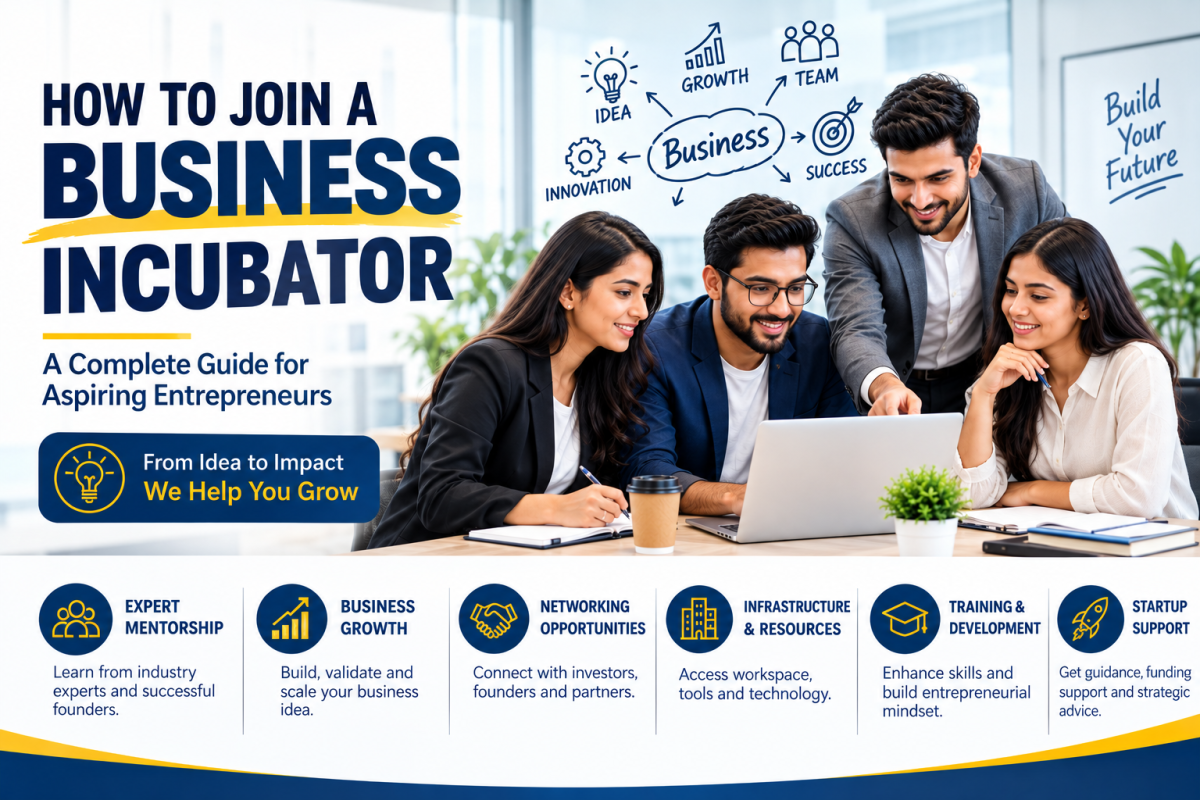
Depending on the incubator and programme, support may include:
- Mentorship: Guidance from experienced professionals can help students evaluate their assumptions.
- Business planning: Students can learn how to structure their business model and operational plans.
- Networking: Connections with entrepreneurs, professionals and other founders can create learning and collaboration opportunities.
- Startup guidance: Students can receive direction on different stages of startup development.
- Market validation: Mentors can help founders assess customers, competitors and market needs.
- Infrastructure: Incubation environments may provide access to facilities, resources or workspaces.
- Training: Workshops and programmes can build entrepreneurial and business skills.
- Funding-readiness: Students can learn how to prepare their business idea and documentation for conversations around potential funding.
- Intellectual property awareness: Founders can become more aware of issues relating to intellectual property and protecting innovations.
- Startup ecosystem connections: Incubators can help connect promising ideas with relevant entrepreneurial networks.
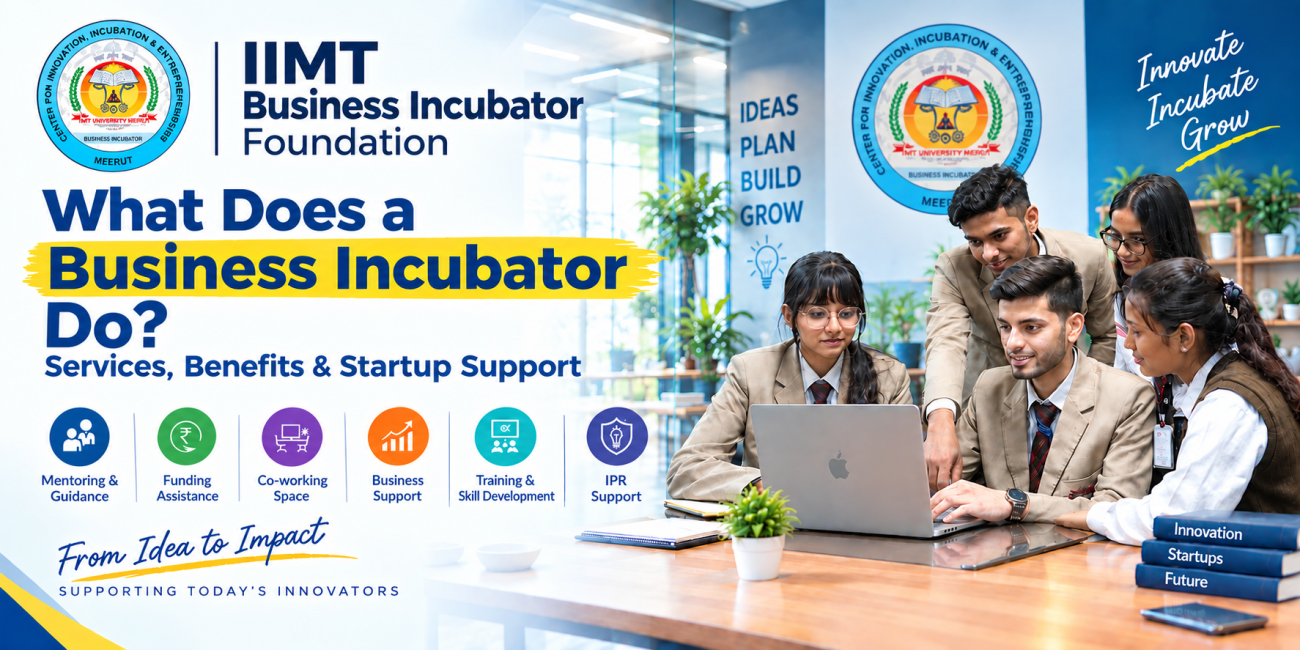
For students looking for structured entrepreneurship support, the IIMT Business Incubator Foundation (IIMT-BIF) can be considered as part of the wider incubation ecosystem associated with IIMT.
Students can explore relevant business incubation and startup support opportunities through the IIMT-CIIE website and understand whether available programmes match the stage of their idea.
The important point is that incubation is not a substitute for customer validation. A mentor or incubator can provide guidance, but students still need to understand the problem, talk to customers and execute the solution.
Common Mistakes College Students Make When Starting a Business
Building Without Validating the Idea
One of the most common mistakes is developing a product before understanding whether customers need it.
Talk to potential users before investing significant time and money.
Spending Too Much Money Too Early
Students should be careful about buying equipment, inventory or expensive software before testing demand.
A small experiment can often provide more useful information than a large initial investment.
Ignoring Customer Feedback
Founders sometimes become attached to their original idea.
Customer feedback may reveal that the product needs to change. Treat this feedback as information rather than criticism.
Trying to Serve Everyone
A new business usually benefits from a clearly defined target audience.
Instead of saying “everyone can use this,” identify the specific group that has the strongest need.
Neglecting Studies and Time Management
College entrepreneurs have another major responsibility: education.
Create realistic schedules and decide how much time can be dedicated to the business each week.
A student startup should be managed in a way that does not unnecessarily disrupt academic responsibilities.
Focusing Only on the Idea Instead of Execution
Ideas are important, but execution determines whether the idea can become useful.
Research, customer conversations, product development, sales, feedback and continuous improvement all matter.
How to Turn a College Project Into a Startup
A college project can sometimes provide the starting point for a startup when it addresses a meaningful problem.
The transition can follow this pathway:
College Project → Problem Validation → Prototype → User Testing → MVP → Business Model → Mentorship → Incubation → Market Launch
Start by asking whether the project solves a real problem outside the classroom.
Next, speak with potential users. If they confirm the problem, develop a prototype that demonstrates the proposed solution.
User testing can reveal technical, usability or market-related issues. After incorporating relevant feedback, develop an MVP.
The next step is to understand the business model. Who is the customer? Who pays? What does it cost to deliver the product? How will customers discover it?
At this stage, mentorship and business incubation can provide additional guidance.
This approach connects academic learning with practical entrepreneurship. A project that begins as an assignment can become a student-led startup only when it demonstrates real-world value and develops beyond the classroom.
Frequently Asked Questions About Startup Ideas for College Students
What are startup ideas for college students?
Startup ideas for college students are business opportunities that students can explore while continuing their education. They can include digital services, tutoring, e-commerce, technology solutions, creative services, food businesses and other problem-solving ventures.
What is the best startup idea for a college student in India?
There is no single best idea for every student. The right opportunity depends on the student’s skills, available time, resources, target customers and ability to solve a genuine problem. Service-based businesses can be practical starting points because they may require less initial investment.
Which business can a student start with low investment?
Content writing, SEO services, social media management, graphic design, digital marketing, online tutoring and some technology services can often be started with relatively low initial investment. Students should still validate demand before spending more money.
Can college students start a startup while studying?
Yes. Students can explore entrepreneurship while studying by starting with a small project, service or MVP and managing the work around their academic schedule. Time management and realistic planning are important.
How can students find a good startup idea?
Students can look for recurring problems in college, their local communities or industries they understand. Speaking with potential customers and researching existing alternatives can help identify opportunities.
How do I validate a startup idea?
Talk to potential customers, understand their current solutions, test a prototype or basic service and collect feedback. Validation should focus on actual customer problems and behaviour rather than only asking whether people like an idea.
Can a college project become a startup?
Yes, a college project can become the foundation of a startup if it solves a real problem and demonstrates demand. The project generally needs further validation, user testing, product development and a sustainable business model.
How can a business incubator help student entrepreneurs?
A business incubator can provide support such as mentorship, business planning, networking, training, market validation guidance, infrastructure and connections within the startup ecosystem. The exact support depends on the incubator and programme.
Where can college students get startup mentorship?
Students can explore university entrepreneurship programmes , business incubators, startup communities, experienced entrepreneurs and relevant professional networks. IIMT-BIF is one option students can explore for incubation and entrepreneurship support.
Final Thoughts: Start Small, Validate Fast and Keep Learning
The best startup ideas for college students do not necessarily begin with large investments or complicated business plans. They often begin with a simple observation: someone has a problem, and there may be a better way to solve it.
Students can use their college years to experiment with different opportunities, develop practical skills and learn how customers think.
A useful framework is:
Problem → Idea → Validation → MVP → Customers → Improvement → Mentorship → Growth
Whether the opportunity involves digital marketing, content, tutoring, technology, food, e-commerce, design or another area, the same principle applies: start with a real problem and test the solution before scaling.
If you have a promising student startup idea but are unsure how to move from concept to execution, exploring business incubation and startup support through IIMT Business Incubator Foundation can be a logical next step. The right mentorship, resources and entrepreneurial environment can help students approach startup development in a more structured way.
Most importantly, keep learning. A student entrepreneur does not need to have every answer at the beginning. startup ideas for college students in India The process of researching, testing, listening to customers and improving the idea is itself an important part of entrepreneurship. startup ideas for college students in India