
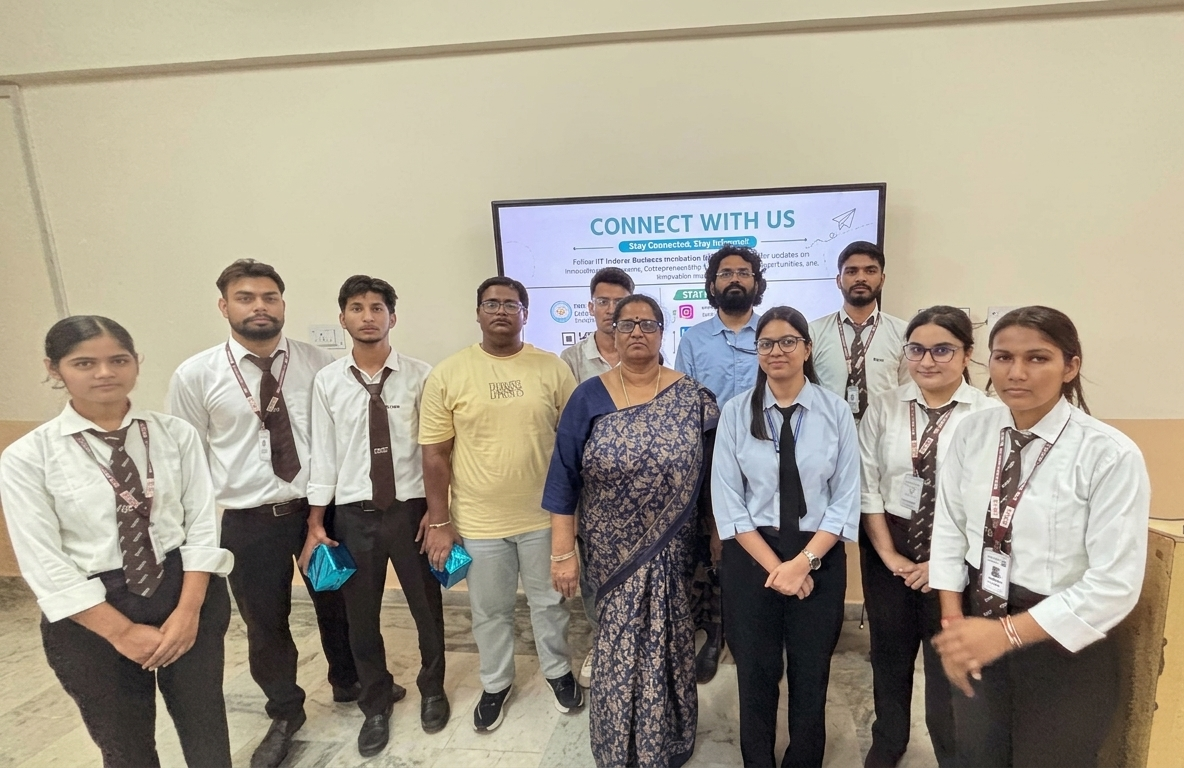
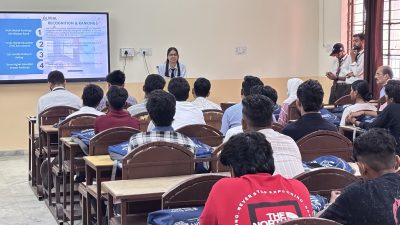
Promoting entrepreneurship, innovation, and startup development among students is essential for building a progressive and self-reliant economy. With the growing importance of innovation-driven businesses, educational institutions play a significant role in encouraging young minds to explore entrepreneurial opportunities and transform innovative ideas into successful business ventures. Recognizing this importance, IIMT Business Incubator Foundation (IIMT BIF) organized an Orientation Session on Awareness of Startup Policy at the School of Pharmacy, IIMT University.
The primary objective of this orientation session was to create awareness among students and faculty members about startup policies, entrepreneurship opportunities, government initiatives, and institutional support available for aspiring entrepreneurs. The session focused on developing an entrepreneurial mindset, encouraging innovation, and helping participants understand the various stages involved in establishing and managing a startup.
Through this initiative, IIMT BIF aimed to motivate students to look beyond traditional career opportunities and consider entrepreneurship as a promising career pathway. The session also highlighted the importance of transforming academic knowledge, research, and innovative ideas into practical solutions that address real-world challenges.
IIMT BIF: Promoting Innovation and Entrepreneurship
The IIMT Business Incubator Foundation (IIMT BIF) plays an important role in promoting innovation, entrepreneurship, and startup development within the academic ecosystem of IIMT University. The foundation encourages students, researchers, faculty members, and aspiring entrepreneurs to develop innovative ideas and explore opportunities for establishing their own ventures.
Through various entrepreneurship development activities, awareness programmes, mentoring initiatives, and incubation-related support, IIMT BIF works towards creating an environment where innovation can grow into sustainable business opportunities.
The foundation emphasizes the importance of providing aspiring entrepreneurs with appropriate guidance, knowledge, mentorship, and institutional support. Such initiatives help students understand the entrepreneurial ecosystem and become familiar with the resources required to develop their ideas into viable business models.
The orientation session at the School of Pharmacy was another step towards strengthening the university’s commitment to fostering an innovation-oriented and entrepreneurial culture.
Objectives of the Orientation Session on Startup Policy Awareness
The orientation session was designed to provide participants with a comprehensive understanding of startup policies and the opportunities available within India’s growing startup ecosystem.
The major objectives of the programme included:
-
Creating Startup Policy Awareness: Educating students and faculty members about startup policies, institutional initiatives, and government-supported entrepreneurship programmes.
-
Encouraging Entrepreneurship: Motivating students to consider entrepreneurship and self-employment as potential career opportunities.
-
Promoting Innovation: Encouraging participants to identify problems and develop innovative solutions through creative thinking and research.
-
Introducing Incubation Facilities: Familiarizing students with the role of incubation centres in supporting early-stage startups.
-
Highlighting Funding Opportunities: Providing information about various funding mechanisms, grants, seed funding, and financial assistance available to startups.
-
Developing Entrepreneurial Skills: Building awareness about business planning, market research, leadership, management, and startup development.
-
Promoting Research-Based Startups: Encouraging students to explore entrepreneurial opportunities emerging from academic research and technological innovation.
The session aimed to bridge the gap between academic learning and practical entrepreneurship by providing participants with relevant information about startup development.
Understanding the Startup Policy and Its Importance
Startup policies are designed to create a supportive environment for individuals and organizations interested in developing innovative business ventures. In India, the Startup India initiative, launched by the Government of India, has played an important role in promoting entrepreneurship and strengthening the startup ecosystem.
During the orientation session, participants were introduced to the significance of startup policies and their contribution to economic development, employment generation, innovation, and technological advancement.
Startup policies provide an enabling framework through which eligible startups may access various benefits and support mechanisms, subject to applicable guidelines and eligibility requirements.
These may include:
-
Startup recognition and facilitation.
-
Access to incubation and mentoring support.
-
Opportunities for funding and financial assistance.
-
Intellectual Property Rights (IPR) awareness and facilitation.
-
Networking with industry professionals and investors.
-
Entrepreneurship development programmes.
-
Support for innovation and commercialization.
-
Guidance regarding business registration and regulatory procedures.
Understanding these initiatives helps students become familiar with the opportunities available to aspiring entrepreneurs and encourages them to take informed steps towards establishing their own startups.
Role of Startup India in Promoting Entrepreneurship
One of the important areas of discussion during startup awareness initiatives is the role of the Startup India programme in developing India’s entrepreneurial ecosystem.
Startup India encourages innovation, supports eligible startups, and promotes a business-friendly environment for emerging entrepreneurs. It provides a framework through which recognized startups can explore applicable benefits, resources, and opportunities.
Students were encouraged to understand how government initiatives can support innovative business ideas and help entrepreneurs navigate the early stages of business development.
The programme also highlights the importance of collaboration among educational institutions, research organizations, industries, investors, and government agencies in strengthening the startup ecosystem.
Such awareness is particularly valuable for students who wish to develop technology-based, research-oriented, and socially impactful business ventures.

Importance of Startup Awareness in Pharmacy Education
The organization of the startup policy awareness session at the School of Pharmacy was particularly significant because the pharmaceutical and healthcare sectors offer considerable opportunities for innovation and entrepreneurship.
Pharmacy students acquire knowledge of pharmaceutical sciences, drug development, healthcare systems, formulation technologies, quality control, and patient care. This academic foundation can serve as a starting point for developing innovative products, services, and business models.
Entrepreneurship awareness enables pharmacy students to explore opportunities beyond conventional employment and consider how their technical knowledge can contribute to the healthcare industry.
Some potential areas of pharmaceutical entrepreneurship include:
1. Pharmaceutical Product Development
Students can explore opportunities related to the development of innovative pharmaceutical formulations, drug delivery systems, and improved healthcare products.
2. Healthcare Technology Startups
Emerging technologies offer opportunities to develop digital healthcare platforms, patient management solutions, telemedicine services, and healthcare monitoring systems.
3. Herbal and Nutraceutical Products
India has significant potential in the herbal and traditional healthcare sectors. Research-based innovation in herbal formulations and nutraceutical products can create opportunities for new ventures, subject to applicable safety and regulatory requirements.
4. Pharmaceutical Manufacturing
Aspiring entrepreneurs can explore opportunities in pharmaceutical manufacturing, contract manufacturing, and specialized production facilities while complying with relevant regulatory standards.
5. Quality Control and Testing Services
There are opportunities for specialized businesses offering pharmaceutical quality assurance, analytical testing, laboratory services, and related technical solutions.
6. Healthcare Innovation and Research
Research-based startups can contribute to solving challenges related to drug delivery, medical devices, diagnostics, and affordable healthcare solutions.
By understanding these opportunities, pharmacy students can identify how their academic knowledge and research interests may be converted into entrepreneurial ventures.
Role of Incubation Centres in Startup Development
Another important aspect of startup awareness is understanding the role of incubation centres in supporting aspiring entrepreneurs.
An incubation centre provides an enabling environment for individuals and teams who want to develop innovative ideas into sustainable business ventures. It helps early-stage entrepreneurs navigate the challenges associated with product development, business planning, market validation, and commercialization.
Through the institutional incubation ecosystem, aspiring entrepreneurs can explore various forms of support, depending on the available facilities and applicable programmes.
These may include:
-
Mentorship and Expert Guidance: Connecting entrepreneurs with experienced professionals who can guide them through different stages of startup development.
-
Business Model Development: Helping innovators understand customer requirements, market opportunities, and business sustainability.
-
Technical Guidance: Supporting the development and improvement of innovative products and technologies.
-
Networking Opportunities: Encouraging interactions with entrepreneurs, industry representatives, investors, and subject experts.
-
Funding Guidance: Creating awareness about suitable funding opportunities and financial support mechanisms.
-
Startup Ecosystem Exposure: Introducing students to entrepreneurial events, workshops, competitions, and innovation platforms.
The orientation session helped highlight the importance of incubation support in transforming innovative ideas into practical business opportunities.
Encouraging Students to Become Job Creators
Traditional education and career pathways often focus primarily on preparing students for employment. However, entrepreneurship provides an opportunity to create employment and contribute to economic growth.
Through startup awareness programmes, students are encouraged to develop confidence, leadership qualities, problem-solving abilities, and business-oriented thinking.
Entrepreneurship is not limited to individuals with significant financial resources or established business backgrounds. It begins with identifying a problem, understanding the needs of potential customers, developing a practical solution, and gradually building a sustainable business model.
Students can begin their entrepreneurial journey by:
-
Identifying an innovative idea or real-world problem.
-
Conducting research and understanding market requirements.
-
Evaluating the technical and commercial feasibility of the idea.
-
Developing a prototype or minimum viable product.
-
Seeking guidance from mentors and incubation professionals.
-
Exploring suitable funding opportunities.
-
Understanding legal, regulatory, and intellectual property requirements.
-
Developing a sustainable business strategy.
This approach helps students recognize entrepreneurship as a structured process that requires knowledge, planning, commitment, and continuous improvement.
Importance of Intellectual Property Rights in Startups
Intellectual Property Rights (IPR) are an important component of innovation and startup development. Innovative ideas, research findings, technologies, designs, and brand identities may have commercial value and require appropriate protection.
During startup awareness initiatives, students should understand the importance of intellectual property protection and its role in supporting innovation.
Important forms of intellectual property include:
-
Patents: Protection for eligible inventions that meet the applicable legal requirements.
-
Trademarks: Protection of brand names, logos, and distinctive business identities.
-
Copyrights: Protection of original creative and literary works.
-
Industrial Designs: Protection of eligible product designs and visual features.
-
Trade Secrets: Protection of confidential business information and commercially valuable processes.
For pharmacy students and researchers, IPR awareness is especially relevant when working on innovative formulations, pharmaceutical technologies, research-based products, and scientific developments.
Understanding intellectual property rights at an early stage can help aspiring entrepreneurs make informed decisions about research commercialization and business development.
Building an Entrepreneurial Culture at IIMT University
Creating a strong entrepreneurial ecosystem requires continuous participation from students, faculty members, academic departments, research professionals, and institutional support organizations.
IIMT BIF aims to contribute to this ecosystem by promoting awareness, encouraging innovative thinking, and connecting aspiring entrepreneurs with relevant startup development opportunities.
Such initiatives can help students identify entrepreneurial possibilities within their respective academic disciplines and develop an interest in innovation-driven careers.
The orientation session at the School of Pharmacy also highlighted the importance of integrating entrepreneurship awareness with academic learning.
By encouraging students to participate in startup-related activities, innovation challenges, workshops, seminars, and mentoring programmes, educational institutions can help develop a generation of confident and responsible entrepreneurs.
Expected Outcomes of the Startup Policy Awareness Session
The orientation session was intended to create a positive impact on participants by improving their understanding of startup policies, entrepreneurship, and available institutional support.
The expected outcomes included:
-
Improved awareness of startup policies and government initiatives.
-
Better understanding of entrepreneurship as a career opportunity.
-
Increased interest in innovation and startup development.
-
Awareness of incubation facilities and mentoring support.
-
Understanding of funding opportunities and startup-related resources.
-
Encouragement to explore research-based business ideas.
-
Greater awareness of intellectual property rights.
-
Promotion of collaboration between students, faculty members, and the startup ecosystem.
Such awareness programmes can contribute to building an academic environment where students are encouraged to think creatively, identify opportunities, and develop solutions to real-world challenges.
Conclusion
The Orientation Session on Awareness of Startup Policy organized by IIMT Business Incubator Foundation (IIMT BIF) at the School of Pharmacy, IIMT University, represents an important initiative towards promoting entrepreneurship, innovation, and startup awareness among students and faculty members.
The programme focused on familiarizing participants with startup policies, government initiatives, incubation support, funding opportunities, intellectual property rights, and the importance of entrepreneurial thinking.
For pharmacy students, the session provided an opportunity to understand how pharmaceutical knowledge, scientific research, and healthcare innovation can contribute to emerging business opportunities.
Through such initiatives, IIMT BIF continues to encourage an innovation-driven academic environment where students can explore their entrepreneurial potential and develop ideas that may contribute to society and the economy.
The ultimate vision is to inspire students to become innovators, entrepreneurs, and future job creators while contributing to India’s growing startup ecosystem and the vision of an Atmanirbhar Bharat (Self-Reliant India)