
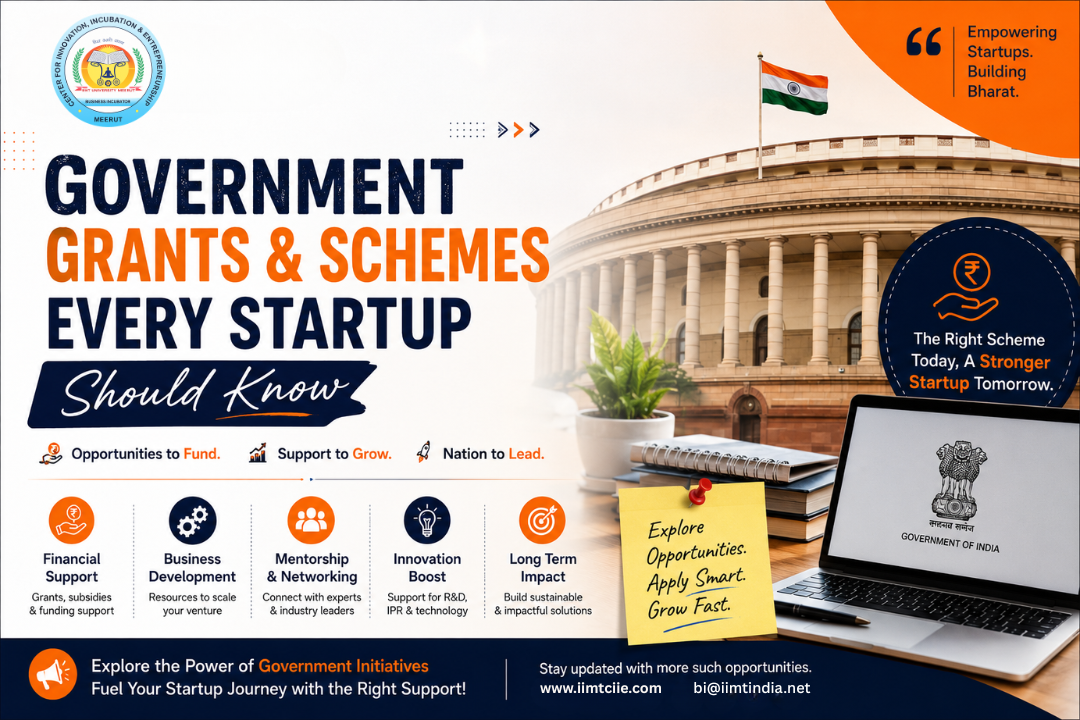
Government Grants for Startups in India play an important role in strengthening the country’s rapidly growing startup ecosystem. Over the past few years, innovation, entrepreneurship, technology, and policy reforms have accelerated India’s growth. As a result, the Government of India has introduced several initiatives to support startups, MSMEs, researchers, and innovators. These programmes provide funding, incubation support, mentoring, intellectual property assistance, and market access.
Moreover, the Department for Promotion of Industry and Internal Trade (DPIIT), under the Startup India initiative, introduced the Playbook of Government Schemes and Initiatives for Startups (June 2026). This playbook brings together schemes from multiple ministries and departments. Consequently, entrepreneurs can identify programmes that align with their business goals and growth stages.
Furthermore, government support is available from the idea stage to commercial expansion. Startups can access funding, research facilities, mentorship, and commercialization opportunities. In turn, these initiatives encourage innovation, attract investment, create employment opportunities, and strengthen India’s startup ecosystem.
Why Government Grants Are Important for Startups
Every successful startup begins with an idea. However, transforming an idea into a successful business requires funding, technical support, and access to markets. In many cases, early-stage startups face challenges related to product development, regulatory approvals, marketing, and customer acquisition.
To address these challenges, the government has introduced several support programmes. These initiatives provide grants, credit support, incubation facilities, and research assistance. As a result, startups can overcome financial barriers and accelerate their growth.
In addition, government programmes encourage innovation in sectors such as biotechnology, artificial intelligence, agriculture, defence, clean energy, healthcare, telecommunications, and advanced manufacturing. Consequently, these initiatives strengthen India’s technological capabilities and contribute to long-term economic growth.
Ultimately, government support enables entrepreneurs to transform innovative ideas into sustainable and successful businesses.
Understanding the Government Startup Support Ecosystem
One of the key strengths of the Government’s startup ecosystem is the diversity of support mechanisms available. Instead of offering only grants or loans, the playbook categorizes schemes based on the type of assistance they provide, allowing entrepreneurs to select programmes that best match their business requirements. These support categories include grants, equity support, loans and credit support, incubation, market access, and mixed support.
Grant-Based Support
Grant programmes provide non-dilutive financial assistance that helps innovators develop prototypes, validate technologies, conduct research, and commercialize products. Unlike traditional investment, grants generally do not require founders to surrender equity, making them particularly valuable for early-stage startups and research-driven enterprises.
Several government ministries offer grant programmes focusing on innovation, scientific research, technical textiles, biotechnology, defence, power, agriculture, and emerging technologies. These grants enable entrepreneurs to experiment with new ideas while reducing financial risk during the initial stages of product development.
Equity Support
Growth-oriented startups often require larger investments to expand operations, enter new markets, recruit talent, or scale manufacturing. Equity-based initiatives support such companies by facilitating investments through venture capital funds, fund-of-funds mechanisms, and specialized investment platforms.
Instead of providing direct grants, these programmes strengthen the investment ecosystem by encouraging institutional investors, venture capital firms, and alternative investment funds to finance innovative startups with strong commercial potential.
Loan and Credit Support
Access to affordable credit remains one of the biggest challenges for startups and MSMEs. Government-backed credit support schemes reduce lending risks for financial institutions, making collateral-free or partially guaranteed loans more accessible to entrepreneurs.
These programmes improve liquidity, enable business expansion, finance working capital requirements, and encourage banks to support innovation-led enterprises that may otherwise struggle to obtain conventional financing.
Incubation Support
Incubation plays a critical role in transforming innovative ideas into sustainable businesses. Government-supported incubators provide office infrastructure, laboratories, maker spaces, technical mentoring, networking opportunities, legal guidance, investor connections, commercialization support, and business development assistance.
Many schemes operate through universities, research institutions, technology business incubators, innovation hubs, and specialized sectoral incubators. These organizations help startups refine business models, improve technologies, develop market-ready products, and connect with investors.
Market Access Support
Developing an innovative product is only the first step in building a successful business. Government programmes also help startups reach domestic and international markets by supporting participation in exhibitions, trade fairs, export initiatives, procurement opportunities, buyer-seller meets, and commercialization programmes.
Such initiatives strengthen business visibility while helping startups establish strategic partnerships and expand globally.
Mixed Support
Certain Government schemes combine multiple forms of assistance, including grants, mentoring, incubation, equity facilitation, infrastructure support, technical assistance, and commercialization guidance. These integrated programmes address multiple startup challenges simultaneously and are particularly useful for high-growth technology ventures.
Supporting Every Stage of the Startup Journey
One of the most valuable aspects of the Government’s startup ecosystem is that it recognizes innovation as a continuous journey rather than a single event. Entrepreneurs require different types of support at different stages of business development, and government programmes are designed accordingly.
The journey begins with the idea stage, where innovators identify real-world problems and develop technology-based solutions. At this point, fellowships, innovation grants, research support, and ideation programmes encourage entrepreneurs to pursue promising concepts without immediate financial pressure.
As ideas mature, startups enter the prototype and proof-of-concept stage, requiring funding for laboratory research, product design, testing, validation, and technical refinement. Government grants help innovators convert concepts into functional prototypes while reducing development risks.
Successful prototypes progress toward commercialization, where entrepreneurs prepare products for market launch, regulatory approvals, manufacturing, and customer acquisition. Specialized commercialization schemes support this transition through funding, mentorship, technical guidance, and business acceleration.
Finally, startups move into growth and scaling, where access to equity investment, market expansion programmes, export promotion initiatives, credit support, and advanced incubation becomes increasingly important. By aligning support with each phase of the entrepreneurial journey, the Government enables startups to grow sustainably while contributing to India’s economic development.
Who Can Benefit from Government Startup Schemes?
The Government’s startup initiatives are designed for a diverse range of beneficiaries rather than a single category of entrepreneurs. Depending on the specific scheme, eligible applicants may include students, individual innovators, researchers, technology entrepreneurs, DPIIT-recognized startups, MSMEs, biotechnology companies, deep-tech ventures, defence innovators, semiconductor startups, agritech enterprises, women entrepreneurs, SC/ST entrepreneurs, incubators, academic institutions, research organizations, and rural enterprises.
This broad eligibility ensures that innovation is encouraged across industries, regions, and communities, creating an inclusive ecosystem where promising ideas receive the support needed to succeed.
Sector-Specific Government Schemes and the Future of India’s Startup Ecosystem
India’s startup ecosystem is expanding rapidly. To support this growth, the government has introduced programmes for sectors such as electronics, semiconductors, telecommunications, defence, space technology, agriculture, fintech, and social innovation.
The Playbook of Government Schemes and Initiatives for Startups (June 2026) brings these opportunities together in one place. It helps entrepreneurs identify schemes that align with their industry and business goals.
These initiatives support research, manufacturing, commercialization, and employment generation. They also encourage startups to develop innovative technologies and strengthen India’s position as a global innovation hub.
Driving Innovation in Electronics and Semiconductor Technologies
Electronics and semiconductor manufacturing have become strategic priorities for India. To strengthen domestic capabilities, the Government has introduced programmes that encourage startups to participate in chip design, embedded systems, electronics manufacturing, and semiconductor research.
The Chips to Startup (C2S) Programme, implemented by the Ministry of Electronics and Information Technology (MeitY), focuses on developing semiconductor design talent through collaboration with academic institutions and industry partners. The programme enables students, researchers, and startups to work on chip design, system-on-chip (SoC) architecture, Very Large Scale Integration (VLSI), embedded electronics, and semiconductor product development. By building indigenous expertise, C2S contributes to India’s long-term technological self-reliance.
Another important initiative is the Design Linked Incentive (DLI) Scheme, which supports startups, MSMEs, and companies involved in semiconductor design. The scheme encourages innovation by providing financial incentives for design development, product deployment, and commercialization. Startups developing integrated circuits, system designs, or semiconductor-based products can leverage this programme to reduce development costs and accelerate market readiness.
Strengthening Digital Technologies and Telecommunications
India’s digital transformation has accelerated demand for indigenous communication technologies and next-generation digital infrastructure. The Government supports innovation in this area through the Digital Communication Innovation Square (DCIS), which promotes research and commercialization in telecommunications, 5G, network technologies, and digital communication solutions. Startups receive mentoring, technical support, and opportunities to validate innovative products in collaboration with industry stakeholders.
The TIDE 2.0 (Technology Incubation and Development of Entrepreneurs) programme further strengthens the digital startup ecosystem by supporting technology-based startups through incubation, mentoring, infrastructure, and seed support. Managed by MeitY, TIDE 2.0 encourages entrepreneurship in sectors such as Internet of Things (IoT), Artificial Intelligence (AI), Blockchain, Cybersecurity, Robotics, and Smart Healthcare, helping founders transform research into scalable businesses.
Defence and Strategic Technology Innovation
Innovation in defence technology has become a national priority under the Government’s vision of self-reliance. The Innovations for Defence Excellence (iDEX) programme enables startups, MSMEs, and innovators to develop advanced defence technologies by participating in innovation challenges and receiving prototype development support. Selected startups gain access to defence organizations, mentorship, testing facilities, and commercialization opportunities, allowing innovative solutions to be integrated into India’s defence ecosystem.
Complementing iDEX is the Technology Development Fund (TDF), administered by the Defence Research and Development Organisation (DRDO). The programme supports indigenous development of defence technologies by funding research projects undertaken by startups, MSMEs, and academic institutions. Its primary objective is to reduce dependence on imported technologies while strengthening India’s domestic defence manufacturing ecosystem.
The playbook also highlights the ADITI (Acing Development of Innovative Technologies with iDEX) initiative, which promotes innovation in advanced defence technologies by supporting startups working on cutting-edge strategic solutions. These programmes collectively strengthen national security while creating significant opportunities for defence technology entrepreneurs.
Expanding Opportunities in India’s Space Economy
India’s rapidly growing space sector presents significant opportunities for private startups. The playbook includes initiatives that encourage entrepreneurship in satellite technologies, launch systems, Earth observation, communication systems, and downstream space applications.
The IN-SPACe Seed Fund Scheme supports startups working on innovative space technologies by providing early-stage financial assistance and ecosystem support. Entrepreneurs receive opportunities to collaborate with India’s space ecosystem while developing commercially viable solutions that contribute to satellite services, launch infrastructure, remote sensing, and space-based applications.
The playbook also refers to initiatives such as the Space Technology Adoption Fund and the Antariksh Venture Capital Fund, which aim to encourage commercialization and investment in space technology ventures. These programmes seek to accelerate private-sector participation in India’s expanding space economy by improving access to capital and technology development opportunities.
Agriculture, Rural Development, and Food Processing
Agriculture remains one of India’s most important economic sectors. Therefore, innovation in farming, food processing, and rural entrepreneurship plays a vital role in sustainable development. The playbook includes several initiatives that support agritech startups, food processing enterprises, and rural innovators.
First, the Agriculture Infrastructure Financing Facility (AIF) encourages investment in warehouses, cold storage facilities, supply chains, and agricultural logistics. As a result, agritech startups can strengthen rural infrastructure and improve market efficiency.
Similarly, the Pradhan Mantri Formalisation of Micro Food Processing Enterprises (PMFME) scheme provides financial assistance, branding support, technology upgrades, quality improvement measures, and market linkages. Consequently, small enterprises can expand their operations and become more competitive.
Furthermore, the National Livestock Mission (NLM) promotes entrepreneurship in dairy farming, poultry farming, sheep rearing, goat farming, and fodder production. In addition, technology-driven startups can develop innovative solutions for livestock management, animal health, and farm operations.
Overall, these initiatives are strengthening India’s agricultural ecosystem while creating new opportunities for entrepreneurs and rural communities.
Inclusive Entrepreneurship and Social Innovation
One of the defining features of India’s startup ecosystem is its emphasis on inclusive growth. The Government has introduced several programmes to encourage entrepreneurship among women, Scheduled Castes (SC), Scheduled Tribes (ST), rural communities, and young innovators.
The Stand-Up India Scheme facilitates institutional loans for women entrepreneurs and entrepreneurs belonging to SC and ST communities, enabling them to establish greenfield enterprises across manufacturing, services, and trading sectors. The initiative promotes financial inclusion while encouraging first-generation entrepreneurs to build sustainable businesses.
The National SC-ST Hub strengthens entrepreneurship among SC and ST enterprises by supporting vendor development, market access, skill enhancement, capacity building, and participation in government procurement. Similarly, the Venture Capital Fund for Scheduled Castes (VCF-SC) improves access to growth capital for innovative enterprises promoted by Scheduled Caste entrepreneurs, helping create employment and wealth within underserved communities.
For rural entrepreneurs, the Start-up Village Entrepreneurship Programme (SVEP) promotes enterprise creation through business mentoring, financial inclusion, and market support, while the Yuva Sahakar Scheme encourages young entrepreneurs to establish cooperative enterprises in agriculture and allied sectors.
How IIMT Business Incubator Foundation (IIMT BIF) Helps Startups Access Government Schemes
While the Government of India offers a wide range of grants, funding programmes, incubation initiatives, and innovation schemes, many startups face challenges in identifying the right opportunity, understanding eligibility criteria, and preparing competitive applications. This is where incubation centres play a crucial role in transforming innovative ideas into successful businesses.
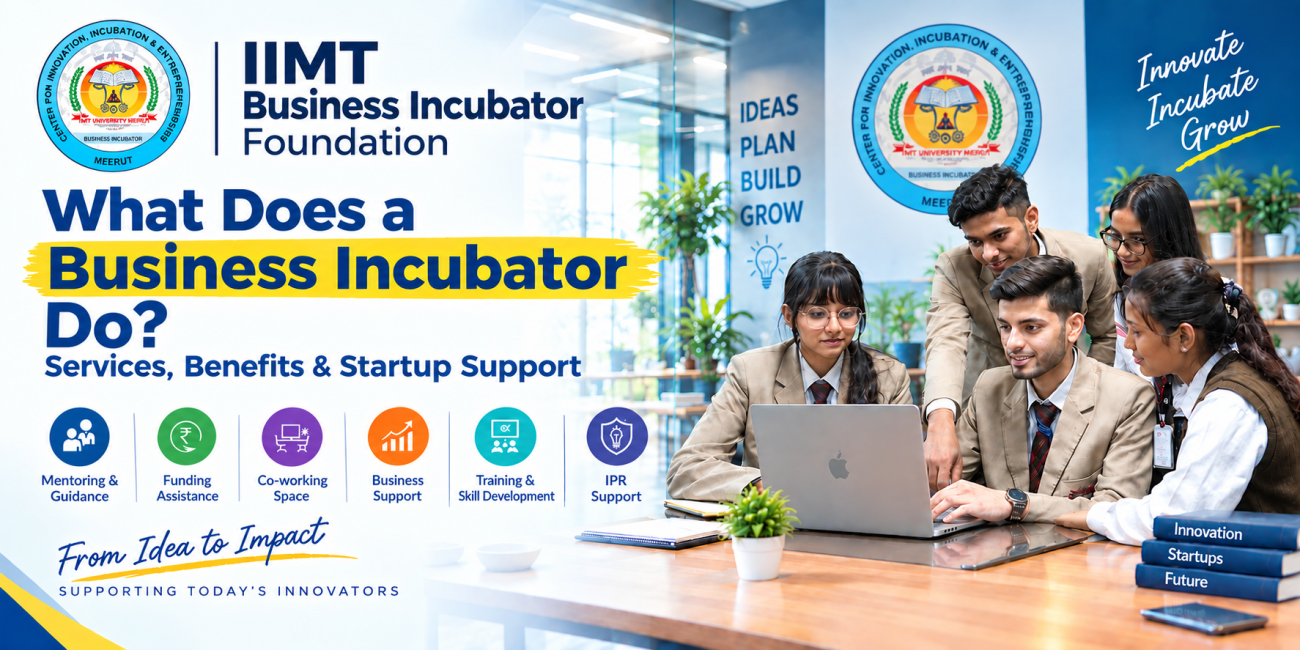
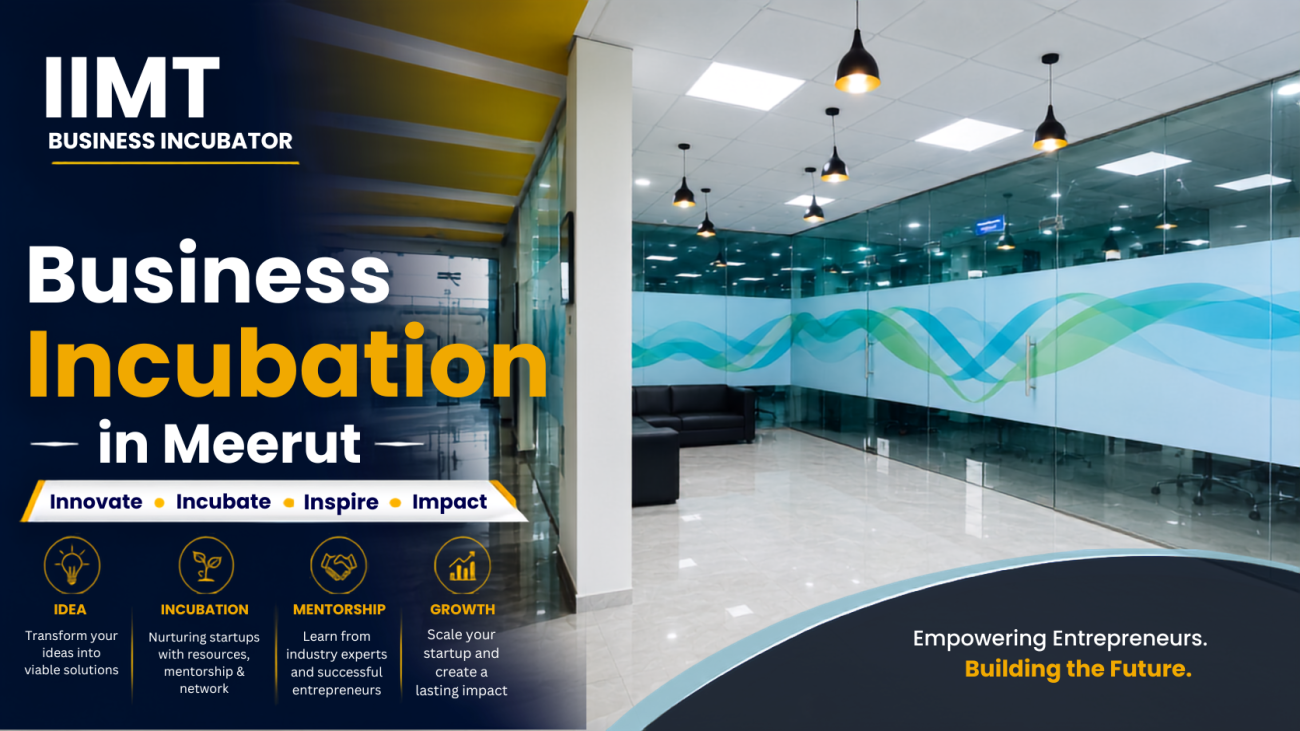
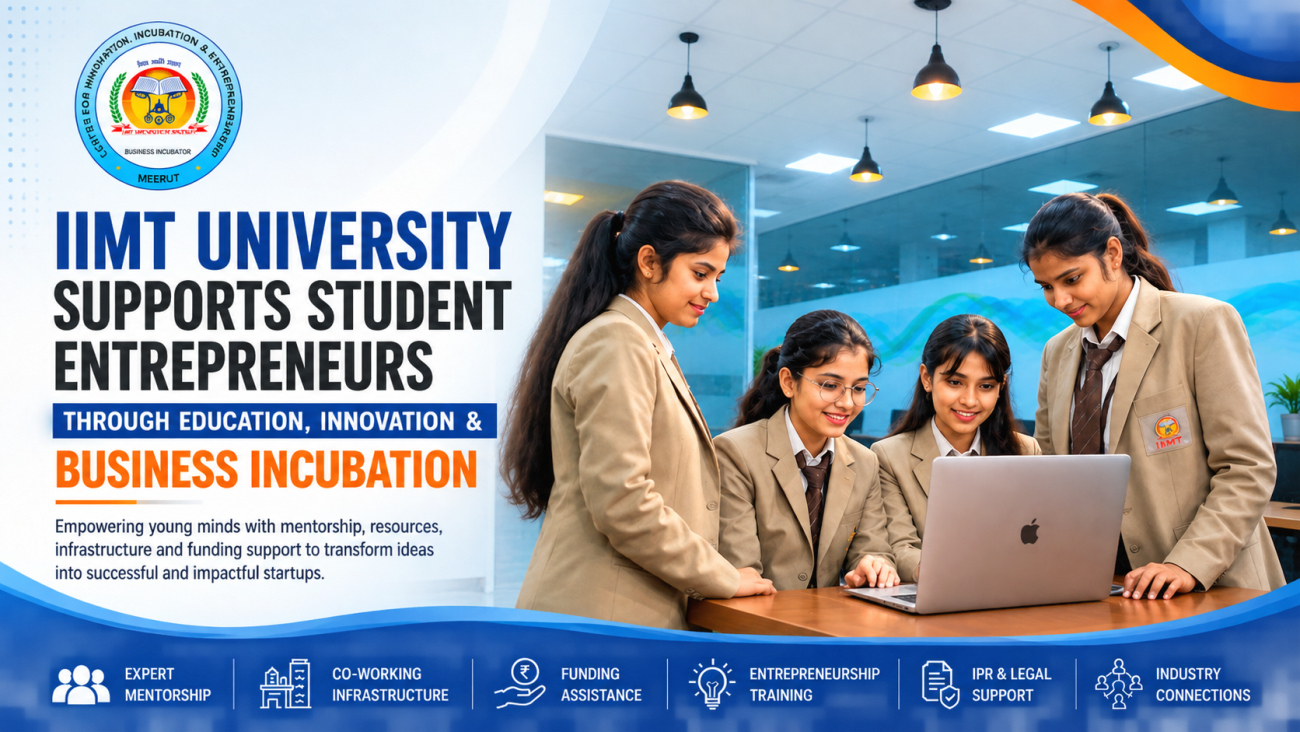
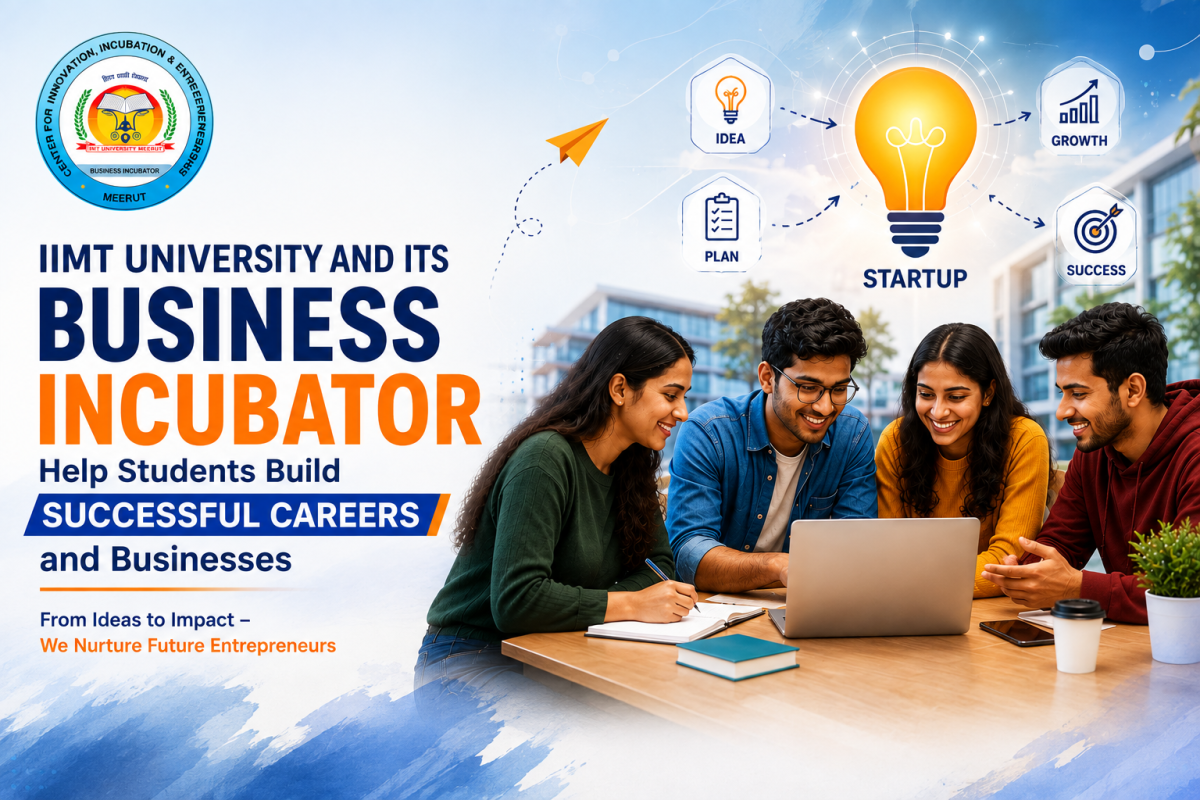
IIMT Business Incubator Foundation (IIMT BIF) serves as a catalyst for innovation by supporting aspiring entrepreneurs, researchers, students, and early-stage startups through a comprehensive incubation ecosystem. The foundation helps innovators navigate the startup journey by providing mentorship, business guidance, technical support, networking opportunities, and connections with industry experts, investors, and government initiatives.
How IIMT BIF Supports Startup Growth
IIMT BIF focuses on building high-potential startups by offering:
- Startup mentoring and business strategy development.
- Assistance with Startup India and DPIIT recognition.
- Guidance in identifying suitable Government of India grants and startup schemes.
- Support for preparing funding proposals, pitch decks, and grant applications.
- Incubation facilities, expert mentoring, and technology commercialization support.
- Investor networking, industry collaborations, and market linkages.
- Entrepreneurship development programmes, workshops, bootcamps, and innovation challenges.
- Access to research facilities and academic expertise for technology-driven startups.
By combining incubation support with access to India’s growing innovation ecosystem, IIMT BIF helps entrepreneurs reduce business risks, strengthen their business models, and improve their readiness for government funding, private investment, and commercial success.
Why Incubation Matters Before Applying for Government Grants
Government funding programmes are highly competitive, and successful applications require more than an innovative idea. Startups need a clear business model, market validation, financial planning, product readiness, and a well-defined commercialization strategy.
The Role of Incubation Centres
Incubation centres such as IIMT Business Incubator Foundation (IIMT BIF) play an important role in supporting entrepreneurs. They provide mentoring, expert guidance, networking opportunities, and business support to early-stage startups.
These resources help entrepreneurs strengthen their proposals and showcase their innovations more effectively. As a result, startups can improve their chances of securing grants, seed funding, incubation support, and investment opportunities.
Startups working in artificial intelligence, biotechnology, healthcare, agriculture, defence, electronics, semiconductors, space technology, clean energy, and digital innovation can benefit from these initiatives. The combined support of government programmes and incubation centres helps transform innovative ideas into successful businesses.
Choosing the Right Government Scheme
With dozens of Government initiatives available, selecting the most suitable programme depends on several factors, including the startup’s stage of development, sector, technology readiness, funding requirements, commercialization plans, and long-term business objectives. Entrepreneurs should evaluate eligibility conditions, financial support, incubation opportunities, and implementation ministries before applying.
The playbook serves as a valuable reference by organizing schemes according to sectors, startup stages, and support mechanisms, allowing founders to identify programmes that align with their innovation journey. Entrepreneurs should also monitor official ministry portals and Startup India announcements for updated guidelines, application windows, and revised eligibility criteria.
Conclusion
India’s startup ecosystem has emerged as one of the world’s fastest-growing centres of innovation. Moreover, government initiatives have strengthened entrepreneurship by providing support for funding, incubation, research, infrastructure, market access, and intellectual property protection.
In addition, the Playbook of Government Schemes and Initiatives for Startups (June 2026) brings together opportunities offered by different ministries and departments. As a result, entrepreneurs can easily identify programmes that align with their industries, business goals, and growth stages.
Furthermore, these initiatives encourage innovation across sectors such as technology, biotechnology, agriculture, defence, space, manufacturing, fintech, and social entrepreneurship. Ultimately, this collaborative ecosystem is helping India move closer to its goal of becoming a global hub for innovation and entrepreneurship.
Frequently Asked Questions (FAQs) About Government Grants & Startup Schemes in India
1. What are Government Grants for Startups in India?
Government grants help startups develop ideas, build prototypes, conduct research, commercialize products, and grow their businesses. Many grants do not require founders to give up equity, making them ideal for early-stage startups.
2. What types of support do Government startup schemes provide?
The Government of India offers multiple forms of support, including:
- Grants for innovation and research
- Seed funding
- Equity support
- Credit guarantee and loan assistance
- Incubation and accelerator programmes
- Intellectual Property (IP) support
- Market access and commercialization assistance
- Mentorship and networking opportunities
3. Which is the best Government funding scheme for early-stage startups?
The Startup India Seed Fund Scheme (SISFS) is one of the flagship initiatives for early-stage startups. It supports proof of concept, prototype development, product trials, market validation, and commercialization through approved incubators.
4. What is DPIIT recognition, and why is it important?
DPIIT recognition is granted to eligible startups under the Startup India initiative. Many Government schemes, tax benefits, and startup support programmes require or prefer DPIIT-recognized startups as beneficiaries. Entrepreneurs should review the specific requirements of each scheme to determine whether DPIIT recognition is mandatory.
5. Are Government startup grants repayable?
Most grant-based schemes are non-repayable because they are intended to encourage innovation and research. However, loan-based and debt-based programmes have separate repayment conditions. Applicants should carefully review the guidelines for each scheme before applying.
6. How can startups choose the right Government scheme?
Startups should evaluate:
- Business stage (idea, prototype, commercialization, or scaling)
- Industry or sector
- Funding requirements
- Eligibility criteria
- Type of support required
- Implementing ministry or department
Selecting the right scheme increases the chances of receiving meaningful financial and technical support.