
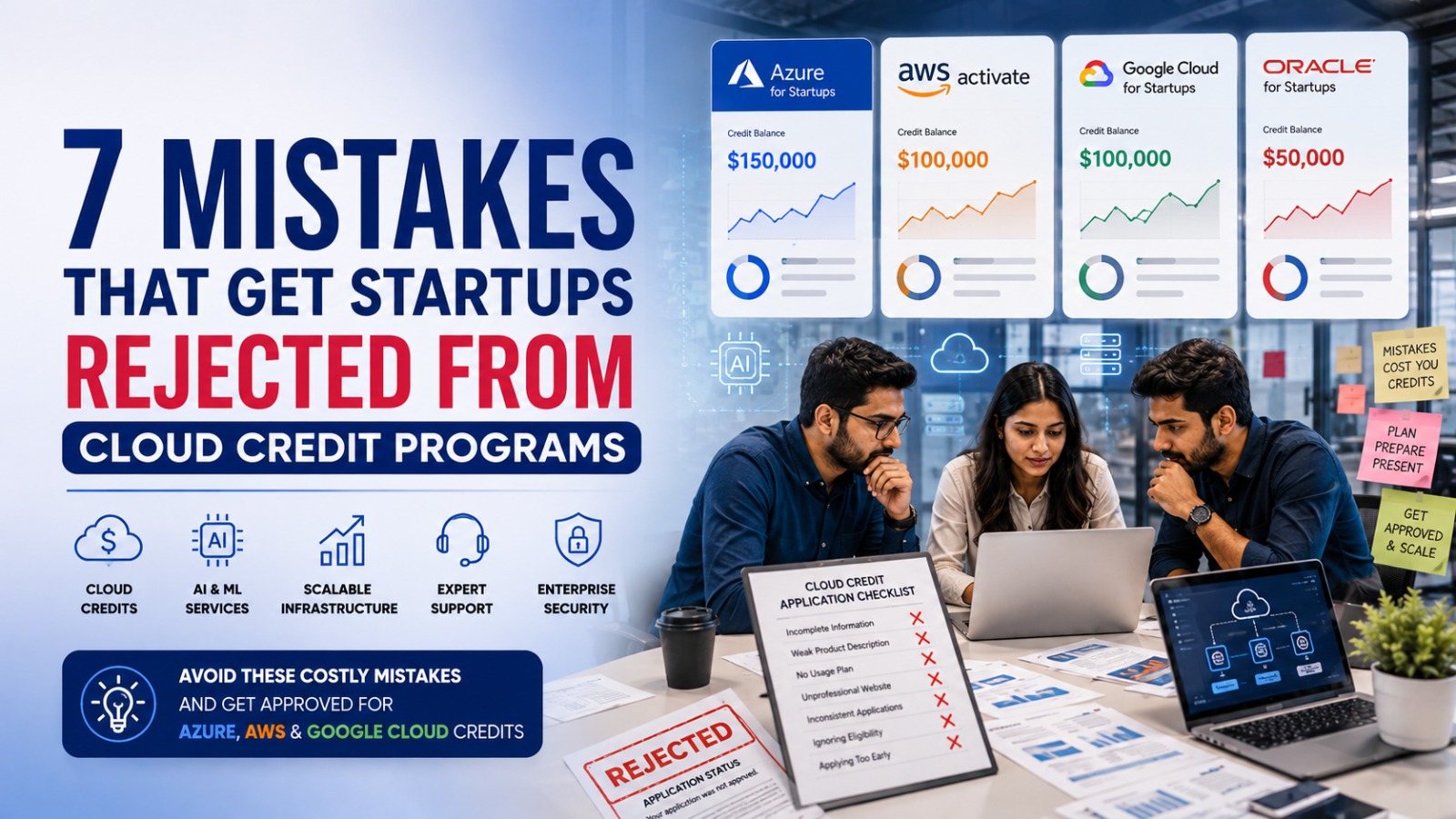
7 Mistakes That Get Startups Rejected From Cloud Credit Programs
Cloud credit programs have become an essential resource for startups looking to build, test, and scale innovative products without spending heavily on infrastructure. Leading providers such as Microsoft Azure, AWS, Google Cloud, and Oracle Cloud offer startup programs that provide cloud credits, technical support, AI services, and business resources. These benefits help founders reduce costs and accelerate product development.
However, many startups fail to receive approval not because their ideas lack potential, but because their applications contain avoidable mistakes. Understanding these common issues can significantly improve your chances of securing cloud credits.
What Are Cloud Credit Programs?
Cloud credit programs provide eligible startups with promotional credits to use cloud services such as virtual machines, databases, AI tools, storage, networking, analytics, and developer platforms. These programs enable startups to build scalable products while preserving capital for growth, hiring, and customer acquisition.
Benefits of Cloud Credits
- Lower infrastructure costs
- Faster product development
- Access to AI and machine learning services
- Improved scalability
- Technical support and mentorship
- Enterprise-grade security and cloud infrastructure
The 7 Most Common Mistakes
1. Incomplete or Incorrect Company Information
Applications with inconsistent business names, outdated websites, incorrect founder details, or missing company information are often rejected during verification.
Best Practice: Ensure your company registration, website, LinkedIn profile, and application contain consistent information.
2. Ignoring Eligibility Requirements
Every cloud provider has specific eligibility criteria. Some programs are designed for early-stage startups, while others require funding, accelerator support, or geographic eligibility.
Best Practice: Read all eligibility requirements carefully before submitting your application.
3. An Unprofessional Website
Your website represents your startup. A website with broken pages, limited information, or no clear product description reduces credibility.
A professional startup website should include:
- Product overview
- Founder or company information
- Contact details
- Business email
- Privacy policy
- Clear value proposition
4. Weak Product Description
Many founders fail to explain what problem they solve and why cloud infrastructure is necessary.
Use this framework:
Problem → Solution → Target Customer → Technology → Business Value
A concise and well-structured product description helps reviewers understand your startup quickly.
5. No Cloud Usage Plan
Cloud providers want to know how you will use the credits.
Instead of writing “We need cloud services,” explain your expected usage.
| Business Need | Cloud Service | Purpose |
|---|---|---|
| Application Hosting | Virtual Machines | Host web application |
| Database | Managed Database | Store customer data |
| AI Features | AI Services | Power intelligent recommendations |
| Storage | Object Storage | Secure file storage |
A practical usage plan demonstrates technical readiness.
6. Inconsistent or Duplicate Applications
Submitting multiple applications with different company names, domains, or email addresses can delay verification and reduce trust.
Best Practice: Submit one complete, accurate application using your official business email and company domain.
7. Applying Too Early
Some startups apply before they have an MVP, website, product roadmap, or clear business model.
Although many programs welcome early-stage founders, reviewers still expect evidence that the startup is actively building a product.
Prepare:
- Working MVP or prototype
- Professional website
- Product roadmap
- Business model
- Cloud architecture overview
Comparison of Popular Cloud Startup Programs
| Program | Main Benefit | Best For |
| Microsoft for Startups | Azure credits, AI tools, developer resources | AI, SaaS, Enterprise Startups |
| AWS Activate | AWS credits and technical support | Cloud-native applications |
| Google for Startups Cloud | Google Cloud credits and AI services | Data, AI, Analytics |
| Oracle for Startups | Oracle Cloud credits and database services | Enterprise and database-intensive startups |
Startup Application Checklist
Before applying, make sure you have:
- ✅ Registered business information
- ✅ Professional company website
- ✅ Business email address
- ✅ Clear startup description
- ✅ MVP or prototype
- ✅ Cloud usage plan
- ✅ Product roadmap
- ✅ Accurate company documents
- ✅ Consistent online presence
- ✅ Verified eligibility
Final Thoughts
Cloud credit programs can significantly reduce technology costs and help startups accelerate innovation. However, approval depends on more than having a great idea. A professional application, accurate company information, a clear product strategy, and a realistic cloud usage plan demonstrate that your startup is prepared to use cloud resources effectively.
Before submitting your application, review every detail carefully, verify your eligibility, and present your business professionally. Taking these steps can improve your chances of approval and position your startup for long-term growth.
Asked Questions
Can a startup reapply after rejection?
Yes. Many providers allow startups to reapply after addressing the issues that caused the initial rejection.
Do I need a registered company?
Requirements vary by provider, but having a legally registered business often strengthens your application.
Can cloud credits be used for AI projects?
Yes. Most major cloud providers support AI, machine learning, data analytics, and generative AI workloads through their startup programs.
Do cloud credits expire?
Yes. Promotional cloud credits generally have an expiration date and must be used within the specified validity period.
Can startups apply to multiple cloud programs?
Yes. As long as you meet each provider’s eligibility requirements, you may apply to multiple startup cloud programs.